



Client visibility
See request, sample and report status without relying on calls and email follow-up.
LUMEN integrates geotechnical engineering, materials testing, site investigation and drilling to give project teams a clearer basis for design and construction decisions.




LUMEN's laboratory is accredited to ISO/IEC 17025:2017 for specific testing activities defined in its approved scope. The accreditation, management-system certifications and national designations are each identified by type, issuing body and applicable scope, so you can confirm what is relevant to your project.
View Credentials & Scope


From our base in Kigali, LUMEN supports infrastructure, development and public-sector projects in Rwanda and across the region by helping teams understand ground conditions, verify materials and resolve technical uncertainties.
Our work begins with a practical question: what do you need to understand, measure or verify before making your next decision?
About LUMENLUMEN supports public agencies, contractors, developers, investors and engineering consultants with the investigation, testing and technical records required to assess conditions, demonstrate compliance and manage project risk.







Tell us what you need to understand, verify or resolve on your project. Our technical team will help define an appropriate investigation, testing or engineering scope.
LUMEN is a Rwandan geotechnical engineering and materials-testing company helping project teams make better-informed infrastructure and development decisions since 2013.
LUMEN helps contractors, consultants, developers, public agencies and asset owners understand the ground and material conditions that influence safety, performance and long-term project value.
We connect geotechnical engineering, testing, field investigation, drilling, advanced analysis and interpretation so each stage informs the next, from investigation to final report.

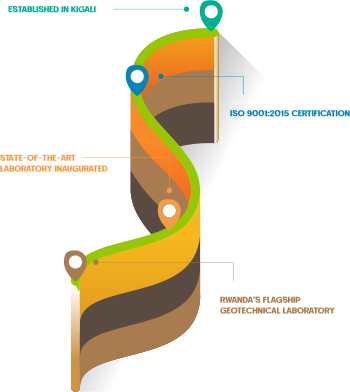
LUMEN began in Kigali as a geotechnical engineering consultancy focused on ground conditions, foundations and project risk. In 2023, we opened our geotechnical and materials-testing laboratory, bringing field investigation, testing and engineering interpretation into a coordinated delivery model.
Today, LUMEN supports clients from initial investigation through laboratory testing, reporting and technical guidance. D‑LUM is being developed to strengthen traceability across the full workflow.
We investigate, test, interpret and document physical conditions through disciplined methods, documented quality controls and responsible technical review.

We aim to strengthen geotechnical insight, laboratory capability and connected technical delivery across Rwanda and the wider region.
Listen carefully, communicate clearly and focus the work on the decision the client needs to make.
Build capability through skilled people, continuous learning and responsible technical practice.
Apply care, traceability and technical rigour to every investigation, test and report.
Tell us the decision you need to support and what information you currently have.
LUMEN helps project teams understand the ground and materials they are working with, so they can make informed design, construction and compliance decisions. We carry out laboratory and field tests using recognised methods, with activities covered by ISO/IEC 17025 clearly identified in our approved scope.
When testing and engineering support are both required, LUMEN brings field observations, laboratory results, technical review and project documentation together, so findings can inform the next decision.
View Credentials & ScopeShare the project stage, material or structure involved, and the decision the results need to support. We will help define the appropriate testing scope.
Request a Testing ScopeLUMEN combines Non-Destructive Testing (NDT), Destructive Testing (DT), targeted sampling, petrographic analysis and engineering interpretation to help project teams understand hidden defects, deterioration and possible causes of underperformance.
Developing capability · Ground-Penetrating Radar and selected geophysical methods remain developing, assignment-confirmed capabilities. Their suitability, technical leadership, equipment, delivery arrangements and accreditation status are confirmed before scope acceptance.
Share the asset, visible symptoms, available records, project stage and decision you need to make. We will help define an appropriate assessment route without recommending more testing than the situation requires.
Request a Technical AssessmentLUMEN helps you interpret field findings, laboratory results and documented project conditions through geotechnical engineering and technical support. We provide consultancy based on the data available and our expertise, helping you make informed project decisions.
When you need both engineering and testing, LUMEN connects field data, laboratory results, interpretation and final recommendations through one coordinated workflow.
Share your project stage, the information available and the decision you need to make. We will help define an appropriate scope for engineering support.
Discuss Engineering SupportOur laboratory is accredited to ISO/IEC 17025:2017 for the tests listed in its approved scope. The accreditation is issued by the Quality And Accreditation Institute — Centre for International Accreditation (QAI CIA), an ILAC MRA signatory. Separate certifications cover our quality, environmental and occupational health and safety management systems.


Accreditation applies to the named tests in LUMEN's officially approved scope, not to the laboratory as a whole. All accreditation claims are limited to that scope.
LUMEN Ltd holds a Rwanda Standards Board Certificate of Designation for its testing activities, confirming compliance with ISO/IEC 17025 for the test methods in its approved scope of designation. This is a national designation and is a separate recognition from the ISO/IEC 17025 accreditation shown above.
The signed certificate and its Annexe A scope of designation are held by LUMEN and available to clients on request.


Professional registration and membership recognise engineering standing and participation in technical bodies. They are separate from laboratory accreditation and management-system certification.
Certificates issued to LUMEN by clients on completion of work. These are project references, not accreditation or certification.


Use the list below to check whether your test falls within LUMEN's accredited scope. These 42 tests are covered by QAI accreditation under ISO/IEC 17025:2017. Work outside this scope follows LUMEN's documented quality system and recognised methods, but is identified as non-accredited. Confirm coverage for your specific test method before commissioning work.
| # | Test performed | Method |
|---|---|---|
| Mechanical Testing · Soil | ||
| 1 | Sieve Analysis | AASHTO T88 |
| 2 | Natural moisture content | AASHTO T265 |
| 3 | Atterberg limit | AASHTO T89, T90, M145 |
| 4 | Linear shrinkage | ASTM D427 |
| 5 | Modified Proctor | AASHTO T180, Method D |
| 6 | Shear Strength Tests (Total Stress) | BS 1377-7 |
| 7 | Direct shear test | ASTM D3080 |
| 8 | Maximum dry density (MDD) | ASTM D698 · AASHTO T99 |
| 9 | Consolidation | ASTM D2435-04 |
| 10 | CBR (Soaked) | AASHTO T193 |
| 11 | CBR (Unsoaked) | AASHTO T193 |
| 12 | Permeability | AASHTO T215 |
| 13 | Drilling Test — Diamond core drilling for soil | AASHTO T225 |
| 14 | Triaxial Test — Consolidated Drained (CD) | ASTM D7181 |
| 15 | Triaxial Test — Consolidated Undrained (CU) | ASTM D4767-11 |
| 16 | Triaxial Test — Unconsolidated Undrained (UU) | ASTM D2850-23 |
| Mechanical Testing · Coarse Aggregates | ||
| 1 | Los Angeles Abrasion Test (LAA) | AASHTO T96 · ASTM C131 |
| 2 | Flakiness Index (FI) | ASTM D4791 |
| 3 | Aggregates crushing value (ACV) | BS 812 Part 110:1990 |
| 4 | Specific gravity and water absorption | AASHTO T85 |
| 5 | Sieve Analysis | AASHTO T27 |
| 6 | Elongation index | ASTM D4791 · BS 812-125 |
| Mechanical Testing · Fine Aggregates | ||
| 1 | Sieve analysis | AASHTO T27 |
| 2 | Specific gravity and water absorption | AASHTO T84/85 · ASTM C128 |
| 3 | Soundness | AASHTO T104 |
| Mechanical Testing · Bitumen | ||
| 1 | Penetration Test | AASHTO T49 |
| 2 | Softening point | ASTM D36-70 |
| 3 | Relative density | ASTM 70-08 |
| 4 | Ductility test | AASHTO T51 |
| 5 | Flash point | AASHTO M20-70 |
| 6 | Viscosity Test | AASHTO T316 |
| 7 | Loss on heat | AASHTO T47 |
| Mechanical Testing · Asphalt | ||
| 1 | Bitumen Content | AASHTO T308 |
| 2 | Extraction test | AASHTO T164 |
| 3 | Bulk S.G of compacted mix | ASTM D2726 · AASHTO T166 |
| 4 | Air voids, % | ASTM D3203 · AASHTO T269 |
| 5 | VMA, % | AASHTO R35 |
| 6 | VFA, % | AASHTO M323 & R35 |
| 7 | Stability and Flow | ASTM D6927 · AASHTO T245 |
| 8 | Maximum density | ASTM D2041 |
| Mechanical Testing · Concrete | ||
| 1 | Compressive Concrete Strength | BS 1881: Part 116 |
| Non-Destructive Testing · Concrete / Reinforced Concrete Structures | ||
| 1 | Rebound Hammer Test | ASTM C805 |
Certificate QAI/CIA/TL/2026/0186 · Quality And Accreditation Institute — Centre for International Accreditation, an ILAC MRA signatory · valid 21 August 2026 to 20 August 2028.
Request our current credential documents and confirm whether your required test method is included in the accredited or designated scope before commissioning work.
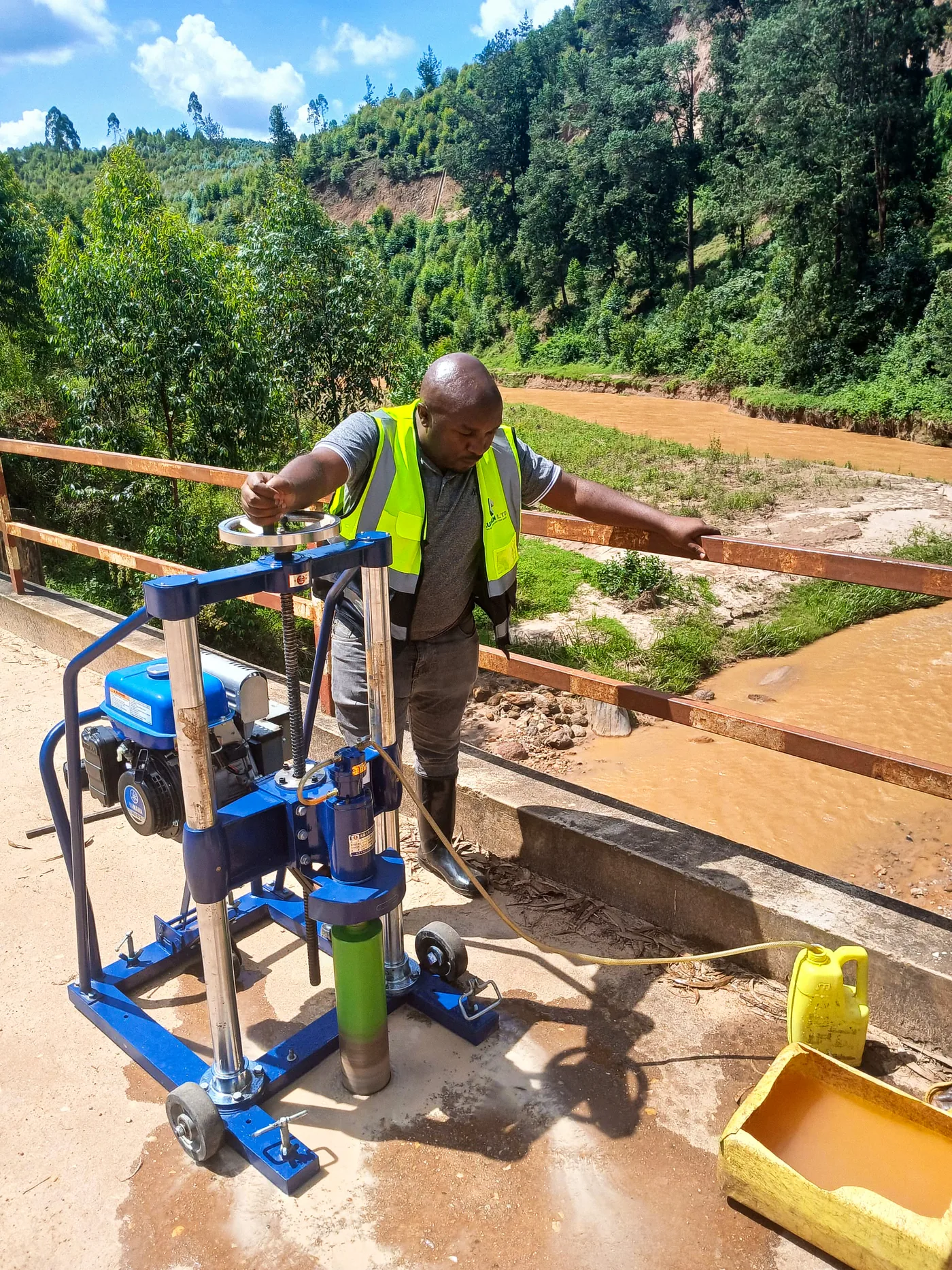
LUMEN provides geotechnical, groundwater and environmental drilling, with borehole logs, samples, field records and technical reports to inform your decisions.
Before mobilisation, the drilling programme should specify your investigation objectives, locations, target depths, sampling and testing requirements, logging standards, reporting outputs, safety controls and environmental responsibilities.
Share your site location, project type, available information, investigation objectives and upcoming decision. We will help define an appropriate drilling and sampling scope before mobilisation.
Request a Drilling AssessmentExplore controlled laboratory spaces, testing equipment, sample preparation and the specialists behind your results.


Describe your material, project stage and the decision your results should support.
D‑LUM is being developed around LUMEN's laboratory operations to connect requests, samples, tests, approvals and reports in one traceable digital workflow. Platform access will become available when D‑LUM is ready.
D‑LUM is designed to link client requests, sample registration, testing, approvals, reports and complaints in one controlled, traceable digital record.
See request, sample and report status without relying on calls and email follow-up.
Track responsibility for sample receipt, testing, reviews, approvals, revisions and reporting.
Keep issued reports linked to their supporting records, approvals, revisions and history.
Record project details, scope and contacts in one place, reducing the need to piece information together from emails.
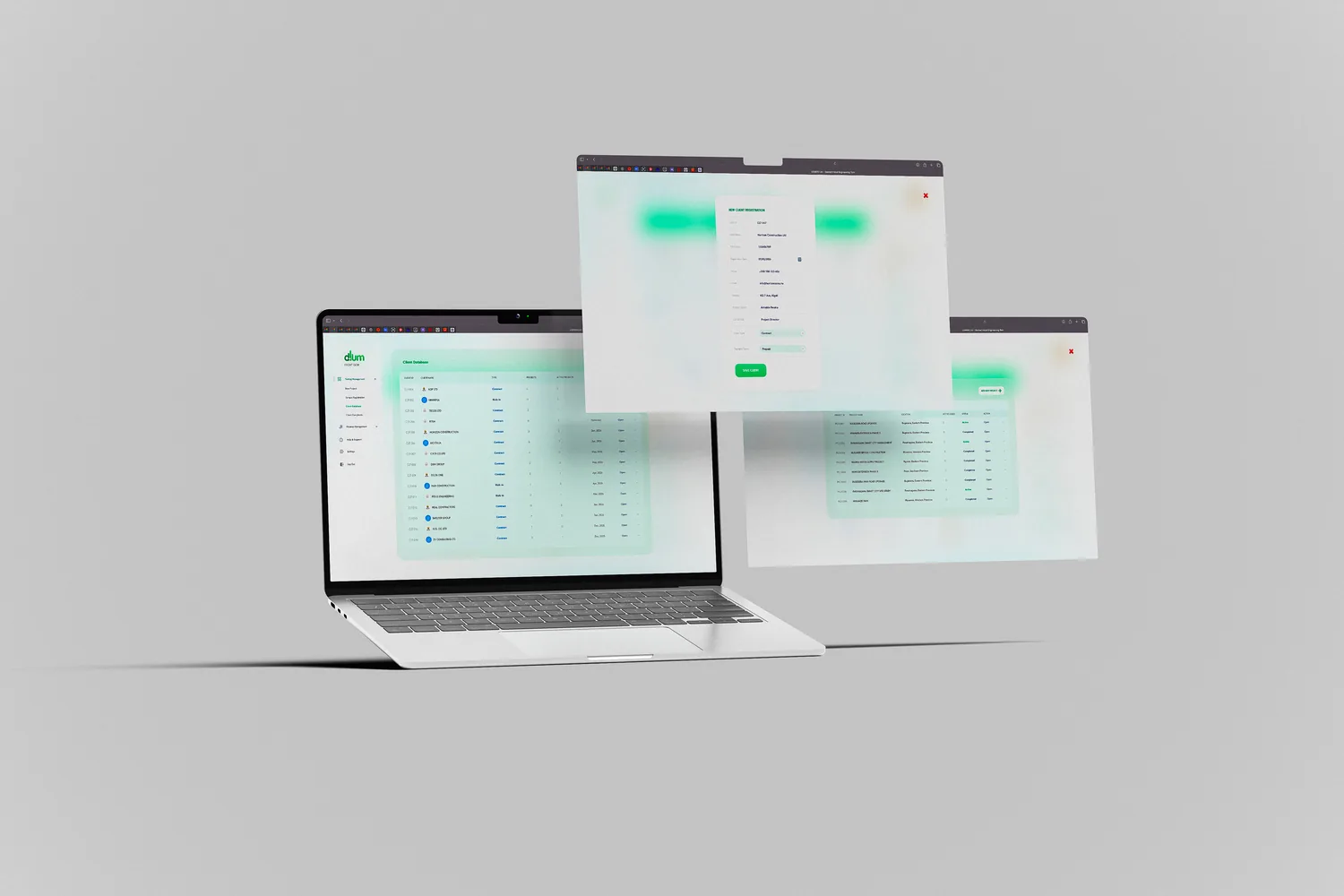
D‑LUM is being developed for the daily demands of geotechnical and materials testing, where every sample, result, approval and report requires clear identification and accountability.
The platform is intended to improve LUMEN's client and laboratory workflows first, with potential relevance to other technical laboratories seeking clearer records, responsibilities and traceability.
Register for updates as D‑LUM moves towards launch.
D‑LUM is LUMEN's forthcoming digital platform, currently in development. Register your interest and we will keep you informed as it moves toward launch and future pilot opportunities become available.
Registering interest does not create an account or grant platform access. D‑LUM is not yet available.
Explore assignments showing the technical question, LUMEN's role, the findings delivered and the decisions those findings supported.

Field investigation and sample recovery, laboratory testing, materials assessment and decision-ready reporting came together in one accountable workflow.

Geotechnical, geophysical and construction-material investigations supporting feasibility, detailed design and tender documentation.
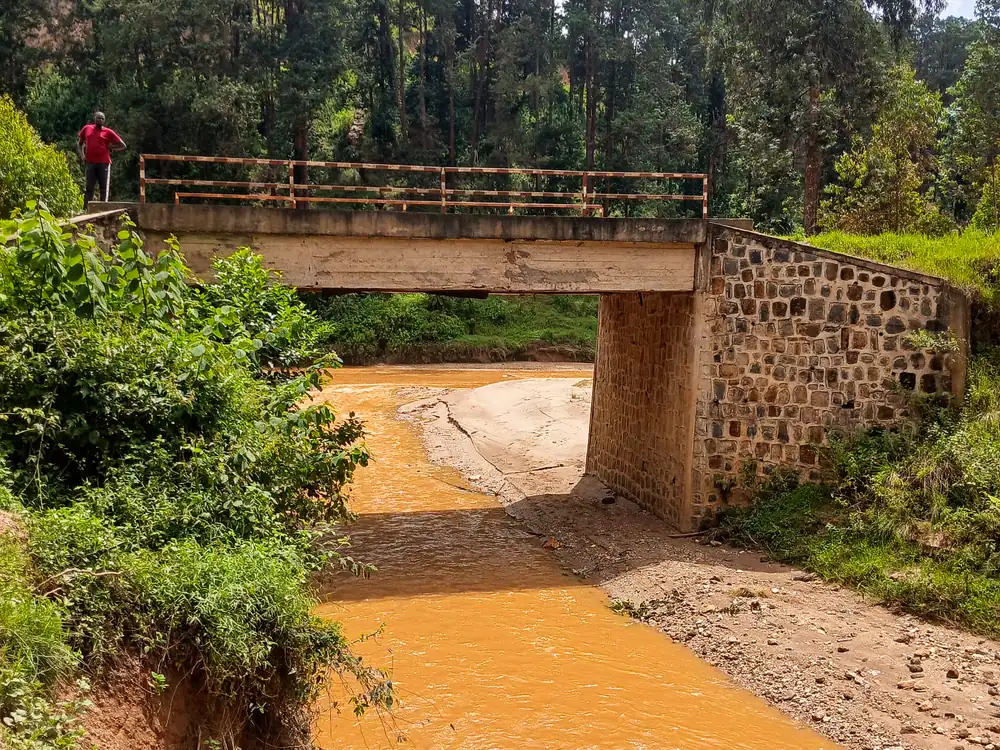
NDT and laboratory testing helped identify where further structural verification was needed, rather than assuming the entire bridge was deficient.
Field and laboratory investigation supporting foundation, drainage, stabilisation and scour-protection decisions at a flood-exposed site.
Two investigations identifying competent rock and shallow groundwater to inform deep-foundation, drainage and slope-design decisions.

Field drilling, in-situ testing, laboratory analysis and integrated geotechnical reporting across multiple road corridors with variable ground, shallow groundwater and fractured rock.
Share your site, project stage and the decision your investigation needs to support.
LUMEN supports international consultants, contractors, developers and project teams working in Rwanda with local geotechnical investigation, materials testing, drilling services and engineering expertise.
Your project requires an understanding of local ground conditions, materials, site access and practical delivery requirements. LUMEN brings local laboratory and field capabilities, backed by experience on infrastructure and construction projects across the country.
Field drilling, in-situ testing, laboratory analysis and integrated geotechnical reporting across multiple road corridors with variable ground, shallow groundwater and fractured rock.
Geotechnical, geophysical and construction-material investigations supporting feasibility, detailed design and tender documentation.
NDT and laboratory testing helped identify where further structural verification was needed, rather than assuming the entire bridge was deficient.
You can review LUMEN's credentials, approved laboratory scope, capabilities and selected project records when assessing technical and commercial suitability. Proposals and technical records can be prepared in English or French to meet your agreed project requirements.
ISO/IEC 17025 accredited by QAI CIA · ILAC MRA signatory
View Credentials & ScopeShare what your project needs to understand, verify or resolve. We will help define an appropriate local investigation, testing or engineering support scope.
Request Rwanda-Based Technical Support
LUMEN is developing services that extend investigation into the condition of bridges, buildings, retaining structures, reservoirs and other assets throughout their operating life.
Developing capability · Before accepting an engagement, we confirm availability, personnel, methods, equipment, programme and accreditation status. These services are not covered by LUMEN's current laboratory accreditation unless explicitly included in its approved scope.
Tell us about your structure, its age, what you have noticed and the decision you need to make. We will confirm whether an available or developing LUMEN service is appropriate for your enquiry.
LUMEN is developing environmental testing and equipment-calibration services under controlled systems to support project compliance and measurement reliability.
Developing capability · Before accepting an engagement, we confirm availability, personnel, methods, equipment, programme and accreditation status. These services are not covered by LUMEN's current laboratory accreditation unless explicitly included in its approved scope.
Share your sample type or equipment details and the standard or compliance requirement you need to meet. We will confirm current service availability and scope.
Welcome to LUMEN Ltd. These Terms and Conditions govern your use of our services and website, and by accessing, using or obtaining any content, products, or services through us, you agree to be bound by these terms. If you do not accept all of these terms, then you may not use our services or website.
LUMEN Ltd provides geotechnical engineering, materials and laboratory testing, field investigation, drilling, non-destructive and advanced testing, engineering consultancy, and — as planned services are introduced — asset integrity and specialised laboratory services. Details of the specific services available can be found on our website or directly through contact with our representatives.
You agree to use our services only for lawful purposes and in a way that does not infringe the rights of, restrict or inhibit anyone else’s use and enjoyment of LUMEN Ltd. Prohibited behavior includes harassing or causing distress or inconvenience to any person, transmitting obscene or offensive content, or disrupting the normal flow of dialogue within our services.
All content included on our website, such as text, graphics, logos, images, as well as the compilation thereof, and any software used on the site, is the property of LUMEN Ltd or its suppliers and protected by copyright and international conventions. The content on the website is provided to you AS IS for your information and personal use only and may not be used, copied, reproduced, distributed, transmitted, broadcast, displayed, sold, licensed, or otherwise exploited for any other purposes whatsoever without the prior written consent of the respective owners.
LUMEN Ltd shall not be liable for any damages resulting from the use of or inability to use the services, including damages caused by wrong usage, network issues, malware, incorrect data, or any other service interruptions.
Payments for services provided by LUMEN Ltd must be made in accordance with the agreed terms stated in the service contract. Late payments, non-payments, and underpayments may result in service discontinuation or adjustments.
Details about our cancellation and refund policy will be clearly stated in your service contract. Please refer to your specific contract for information on how to cancel your service and applicable refunds.
We may update our Terms and Conditions from time to time. We will notify you of any changes by posting the new Terms and Conditions on this page. You are advised to review this Terms and Conditions periodically for any changes.
If you have any questions about these Terms and Conditions, please contact us at:
LUMEN Ltd is committed to protecting the privacy and security of the personal information of our clients and visitors. This Privacy Policy explains how we collect, use, disclose, and safeguard your information when you interact with us through our services or visit our website.
We may collect personal information that you provide to us when you:
The types of personal information collected can include:
Information you submit through the contact form is used only to respond to your enquiry and is retained no longer than necessary for that purpose. We ask for your explicit agreement before you submit the form.
We use the information we collect to:
We may share your information with:
We implement a variety of security measures to maintain the safety of your personal information. However, no electronic storage or transmission of information can be entirely secure. We strive to protect your personal information but cannot guarantee its absolute security.
You have the right to:
This website uses two categories of cookies:
No analytics or other non-essential cookies are placed until you give your consent through the cookie banner shown on your first visit. You can review or change your choice at any time using the “Cookie preferences” link in the site footer. Your choice is stored only on the device and browser you are using.
We may update this Privacy Policy from time to time to reflect changes in our practices or legal requirements. We will notify you of any significant changes by revising the date at the top of the policy.
If you have any questions about this Privacy Policy, please contact us at:
LUMEN operates to internationally recognised AASHTO, ASTM and BS standards. Filter by material family or search by method code or title to confirm whether a specific test falls within our scope.
No method matches that search. Try a code such as T99 or a term such as density.
Investigations are executed through controlled field and laboratory procedures with appropriate quality assurance, safety, environmental protection, equipment verification, sample traceability, data integrity and technical reporting requirements.
Tell us the site, the stage you are at and the decision the results need to support. Our team will confirm the appropriate investigation and testing scope.
Recognised methods, controlled records, technical review, site safety and confidentiality were applied under LUMEN's ISO 9001:2015 quality system. Only tests listed in LUMEN's approved ISO/IEC 17025 scope are accredited; all other tests and field activities in this scope of work are non-accredited.
Scope note. Test quantities, depths, methods, programme and reporting format were agreed in LUMEN's project proposal before mobilisation.
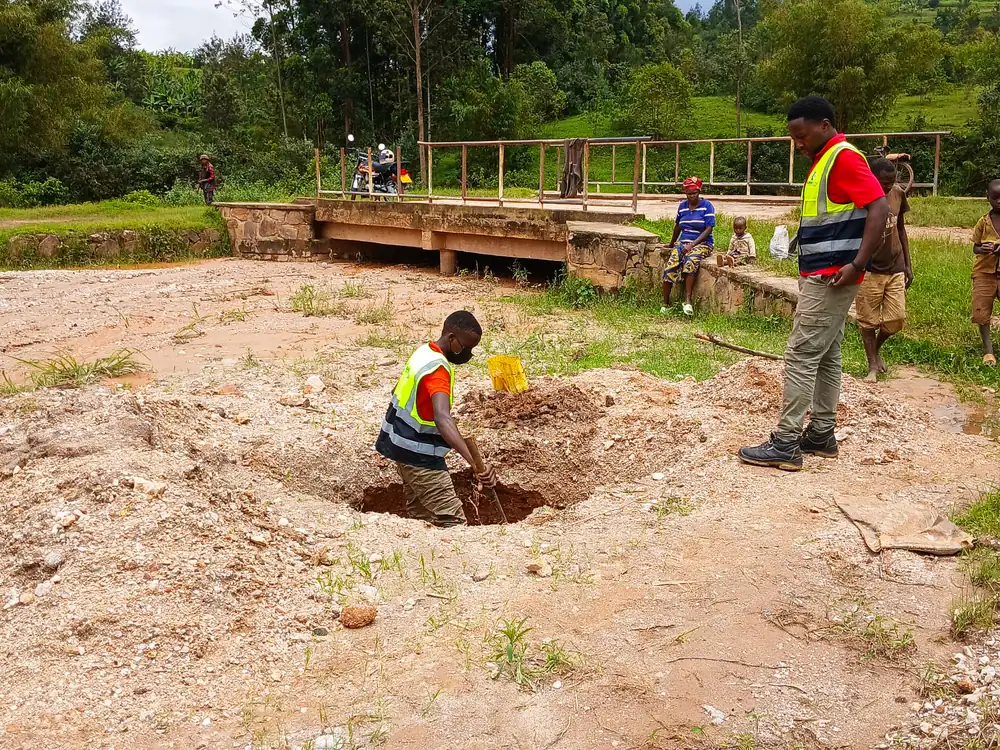
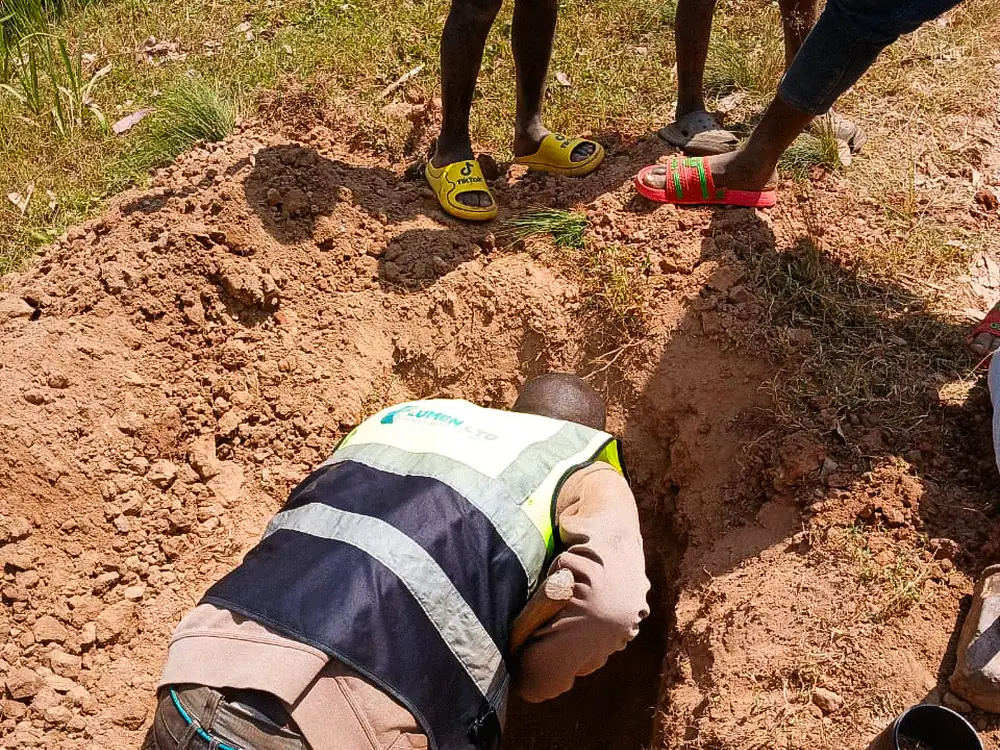
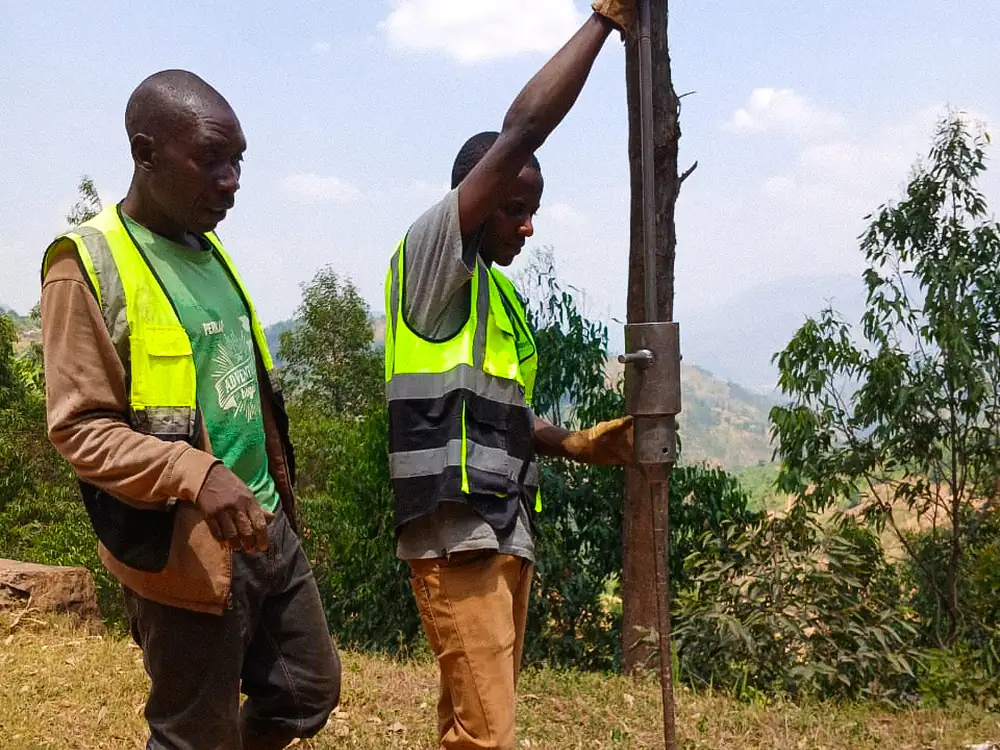
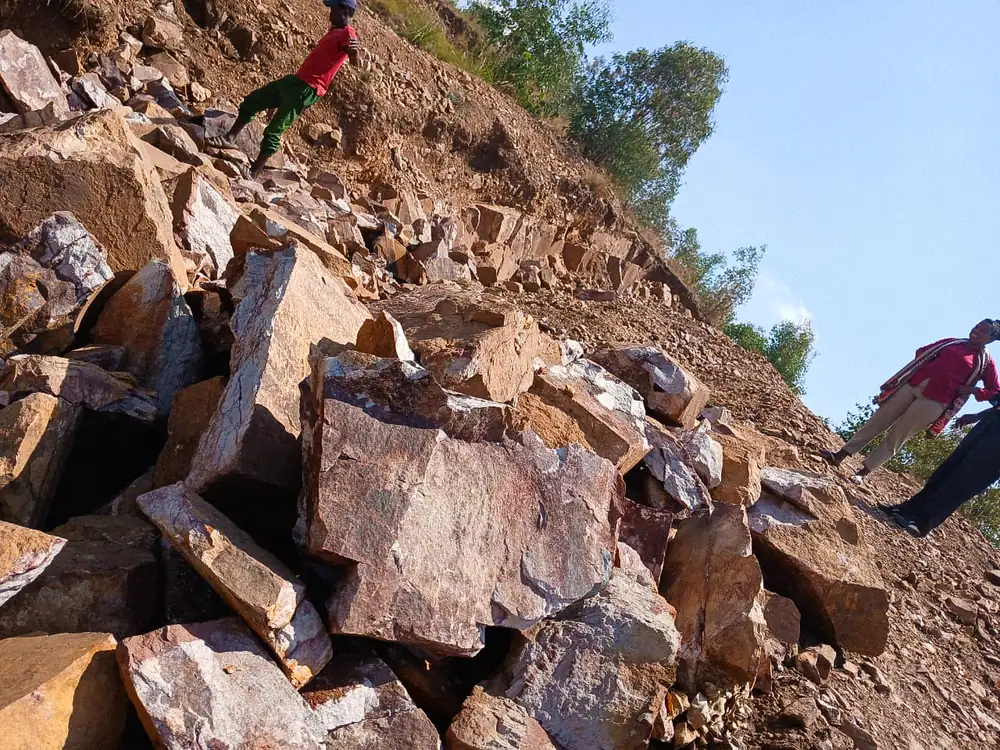
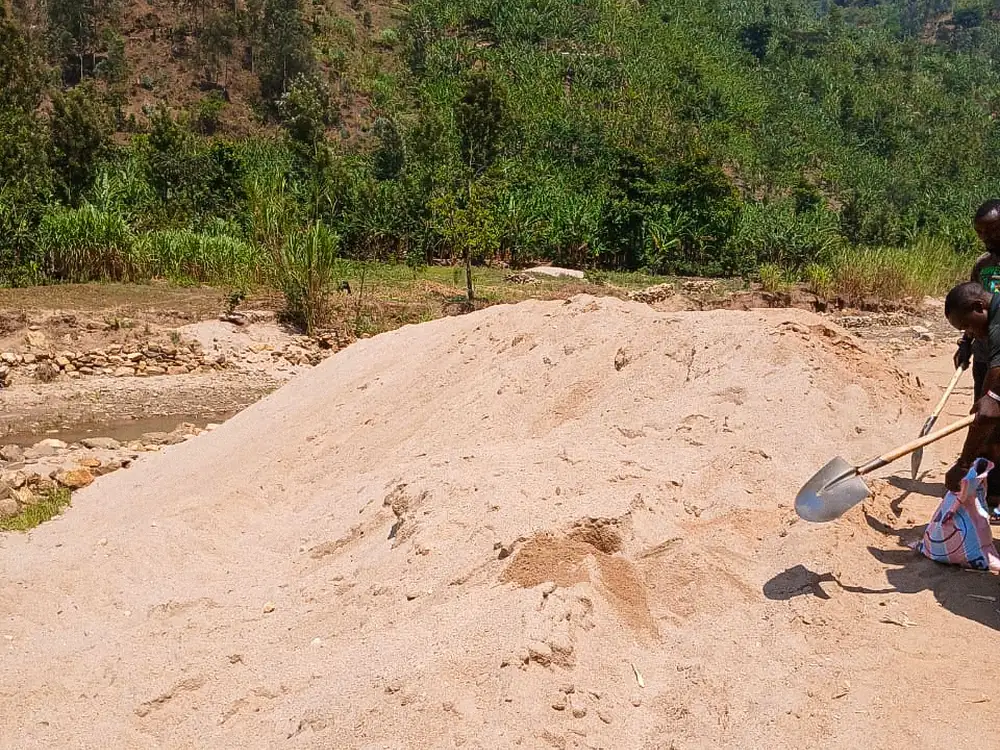
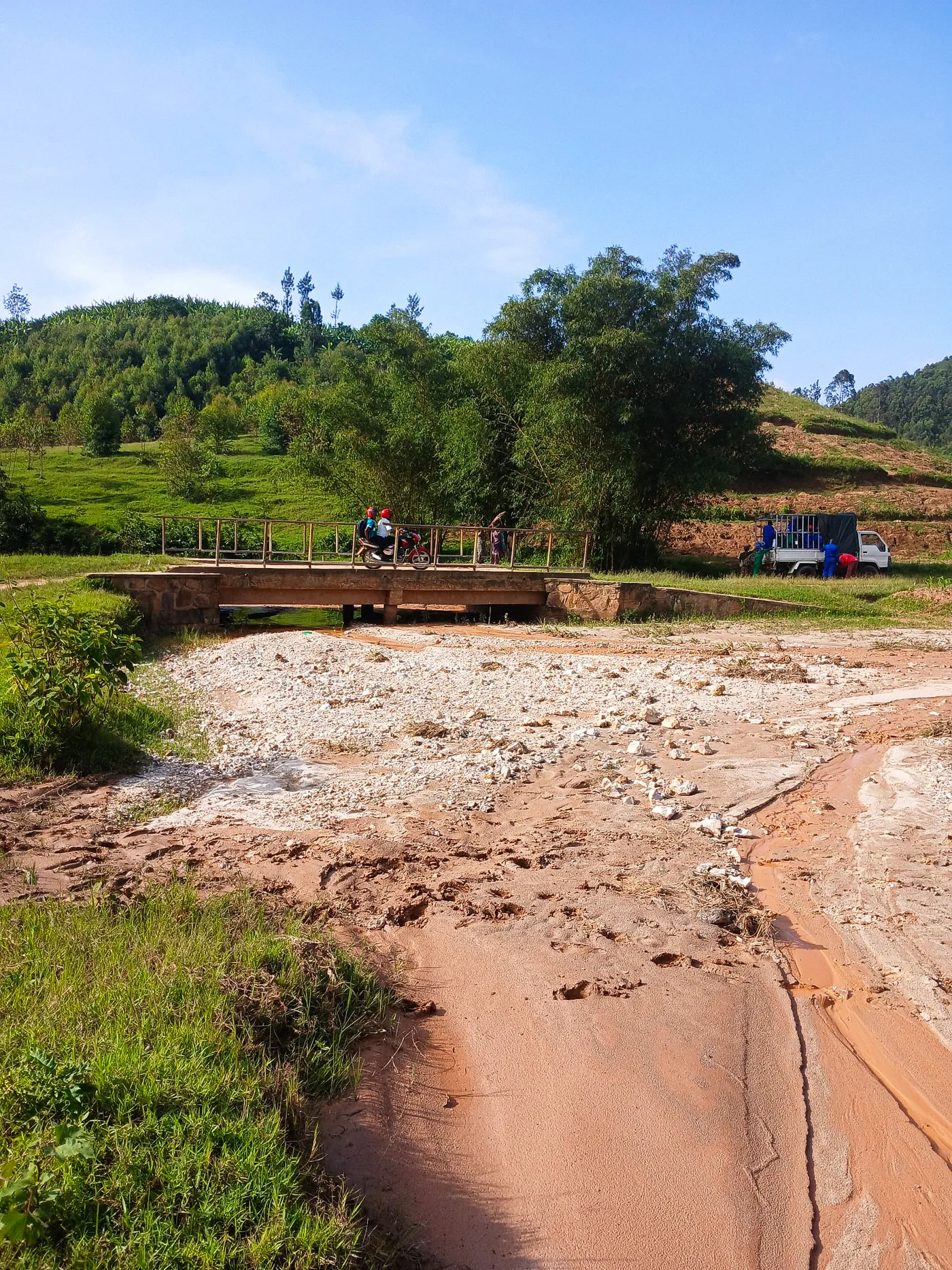
Mbogo Bridge is the first of three locations investigated under this appointment. The record covers the crossing itself, the trial pits and in-situ testing along the alignment, and the quarry and river-sand sources assessed for construction materials.
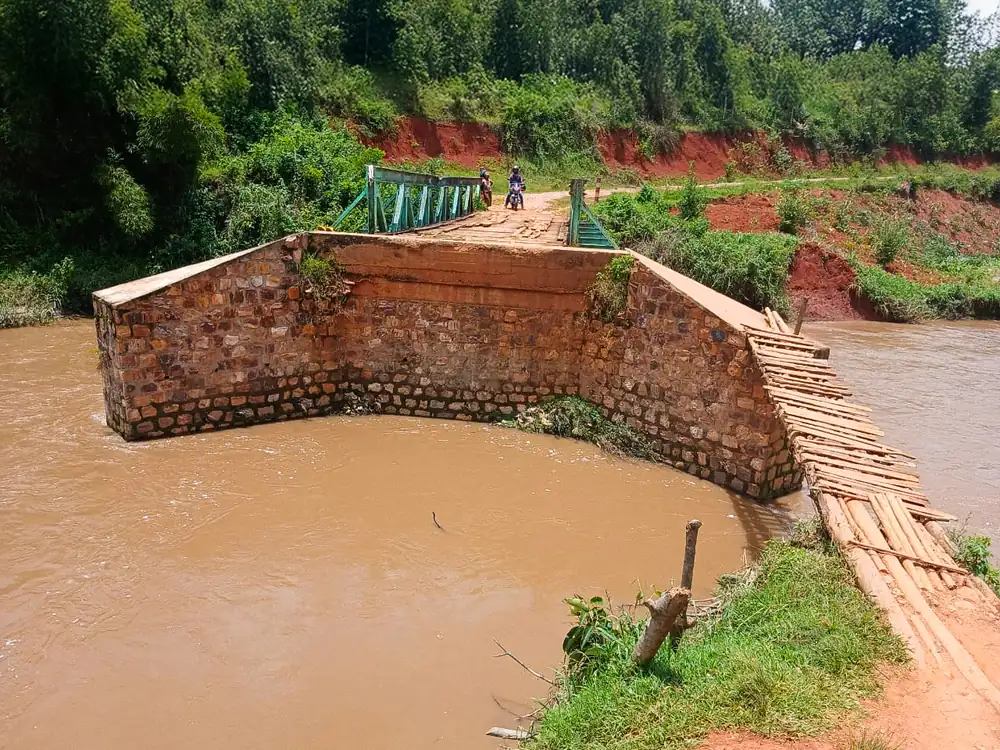
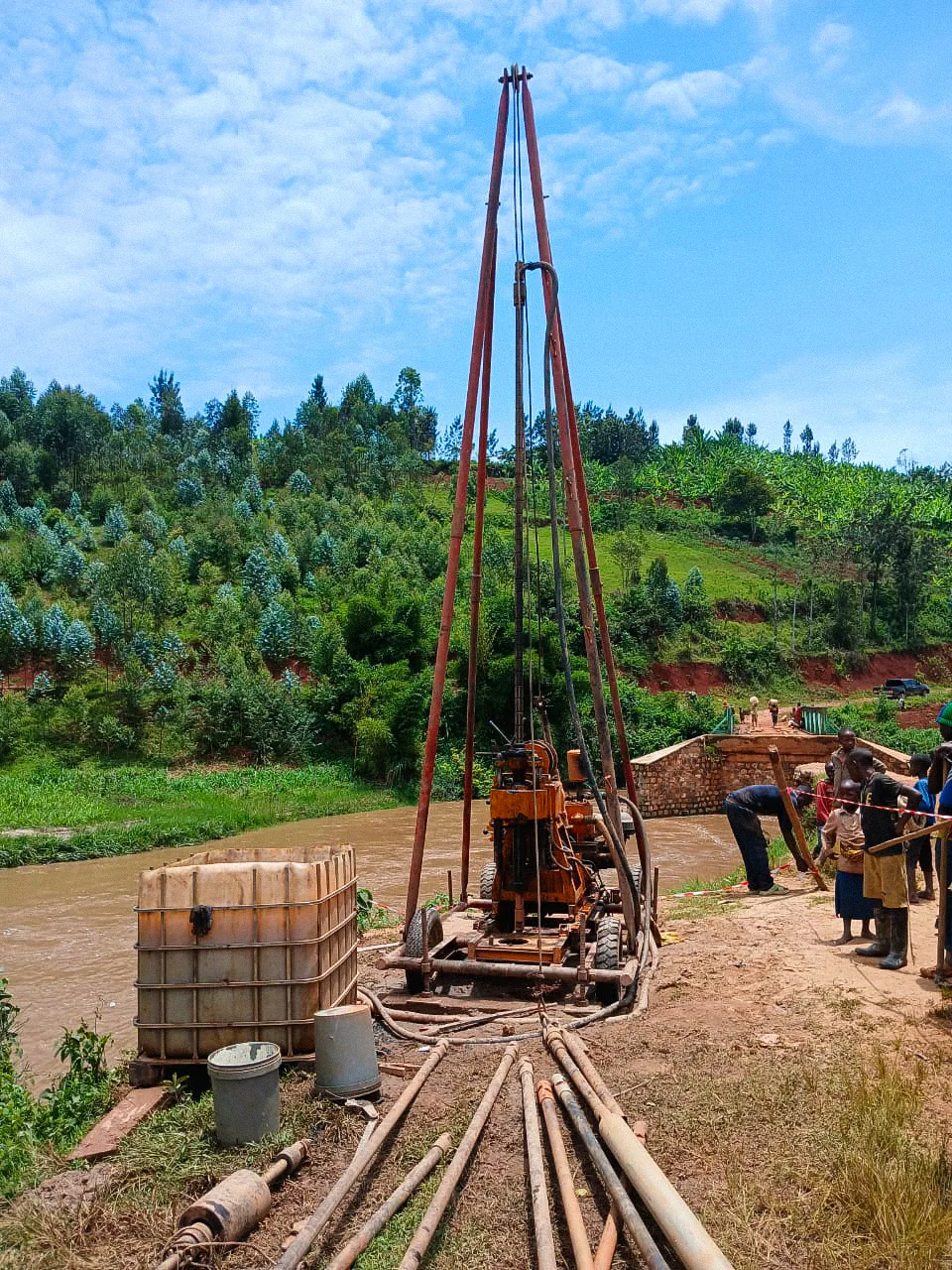
Karwa Bridge is the second location. The record covers rotary drilling across the river bed, survey control of the investigation points, and the quarry source assessed for construction materials.
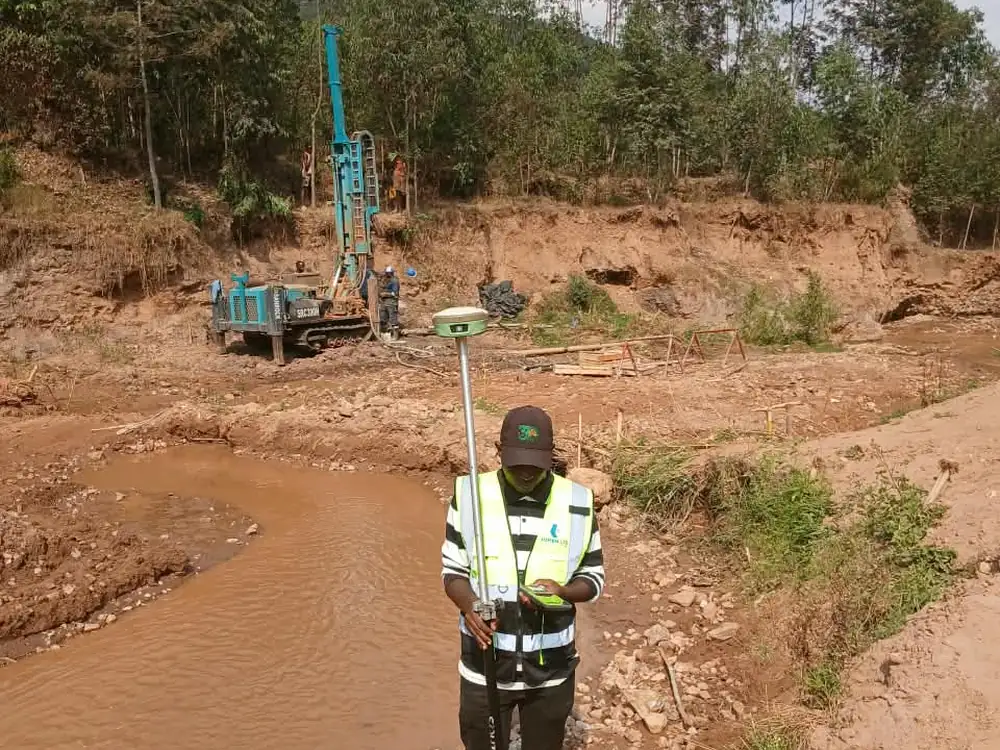
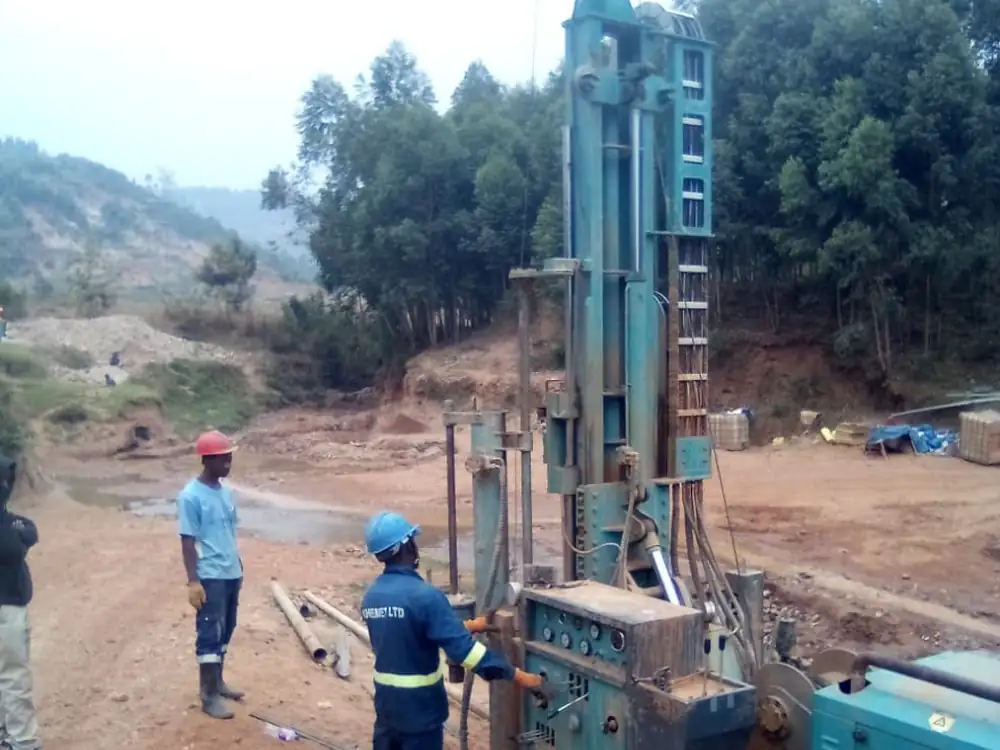
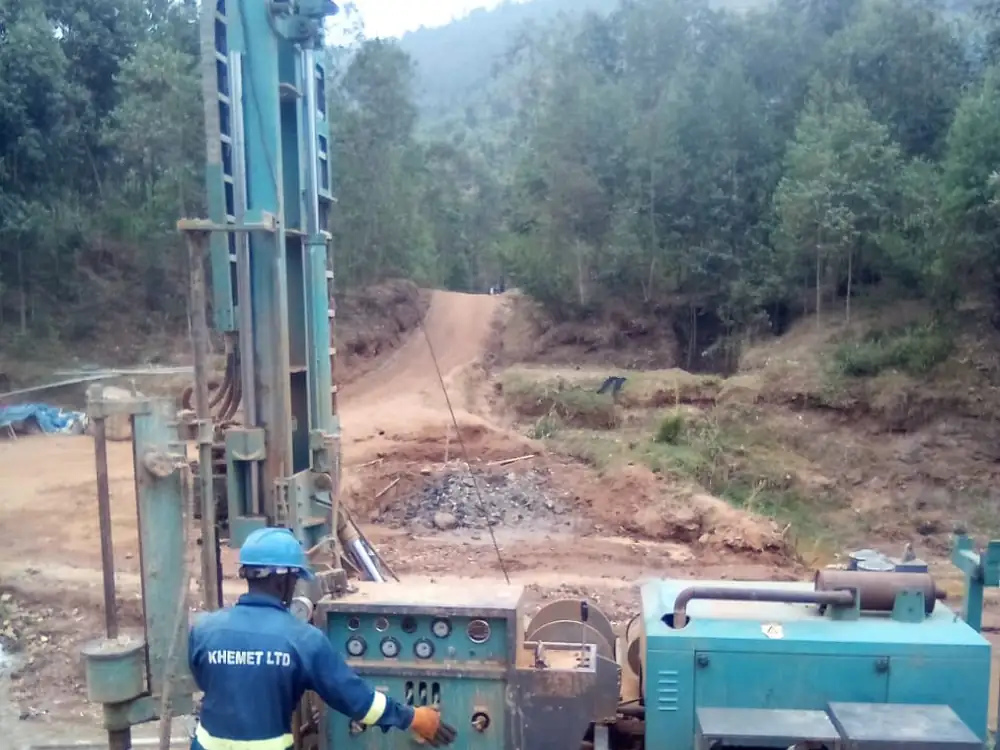
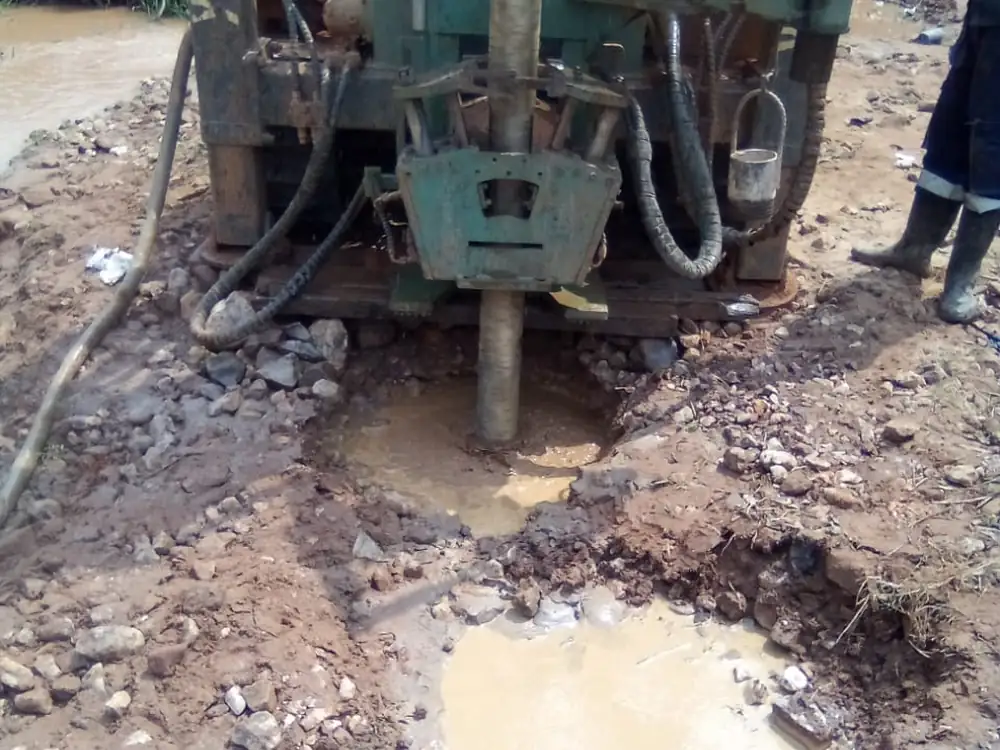
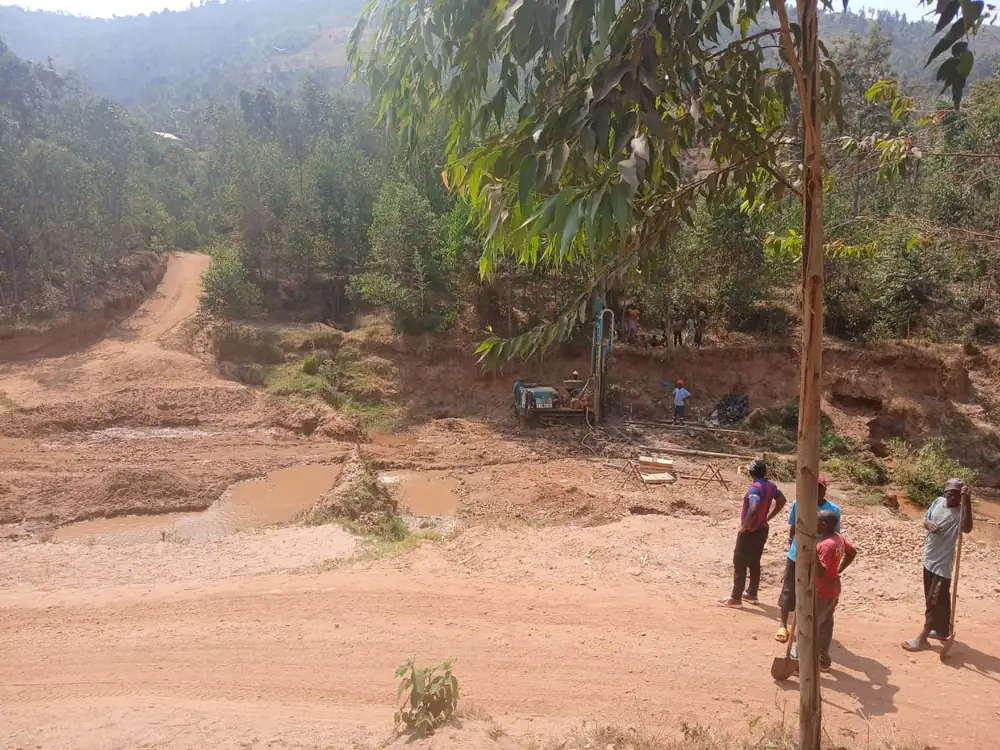
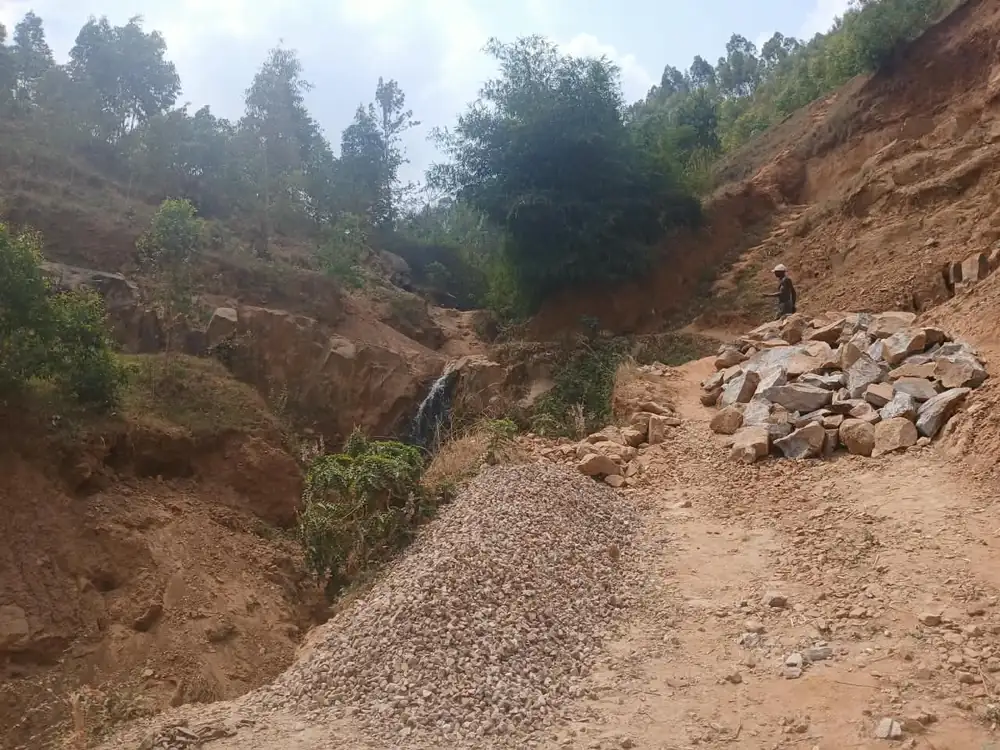
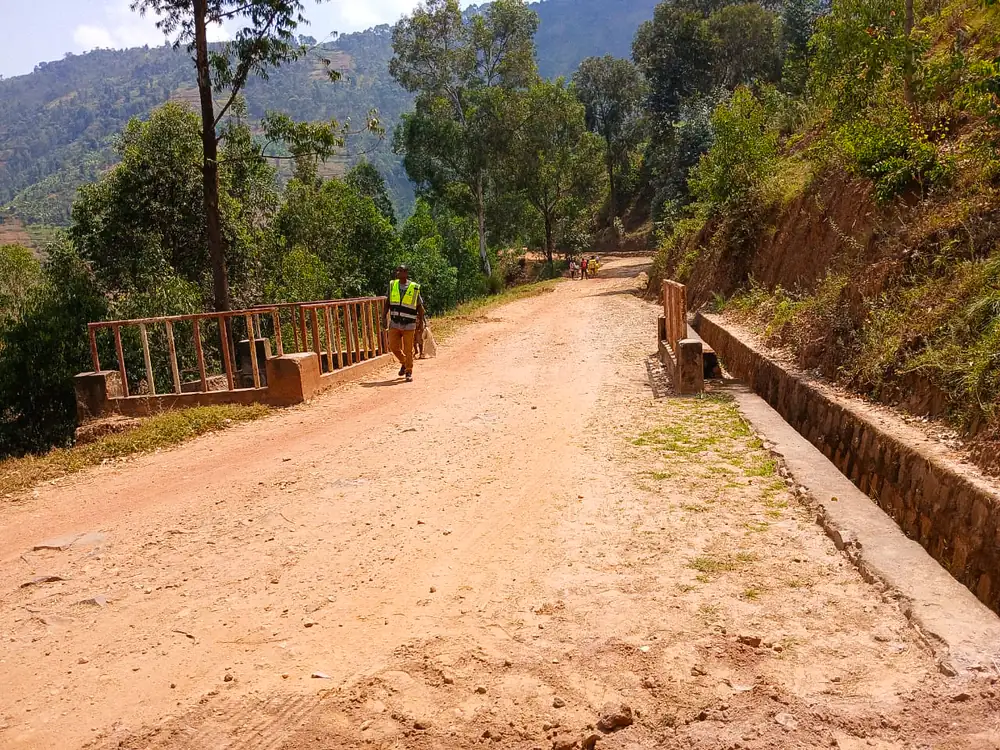
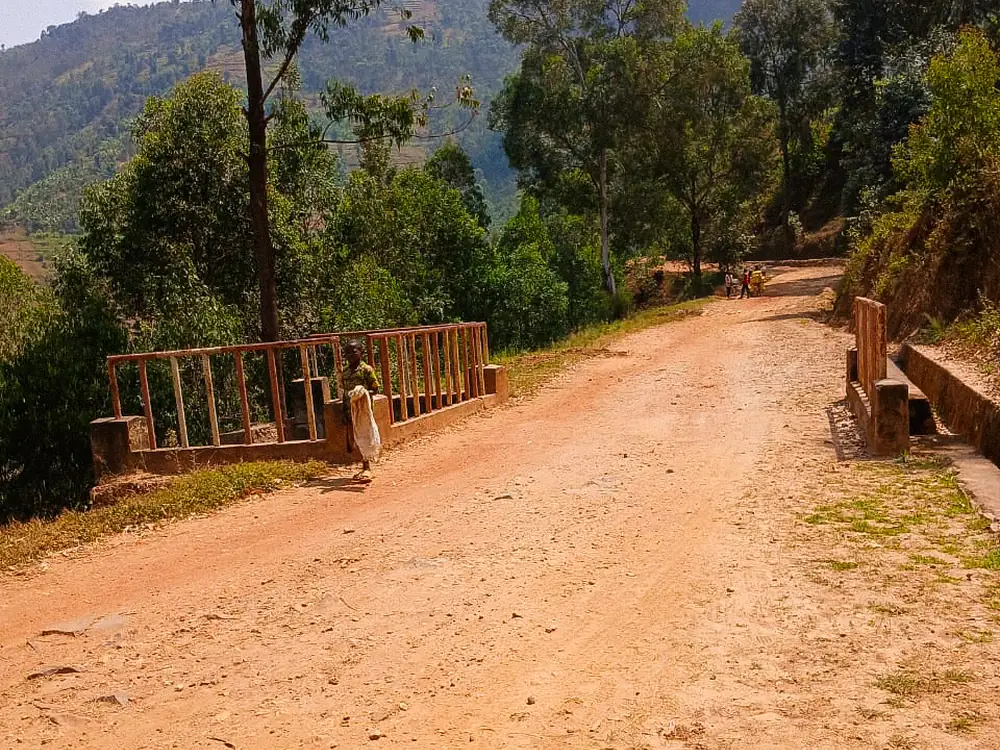
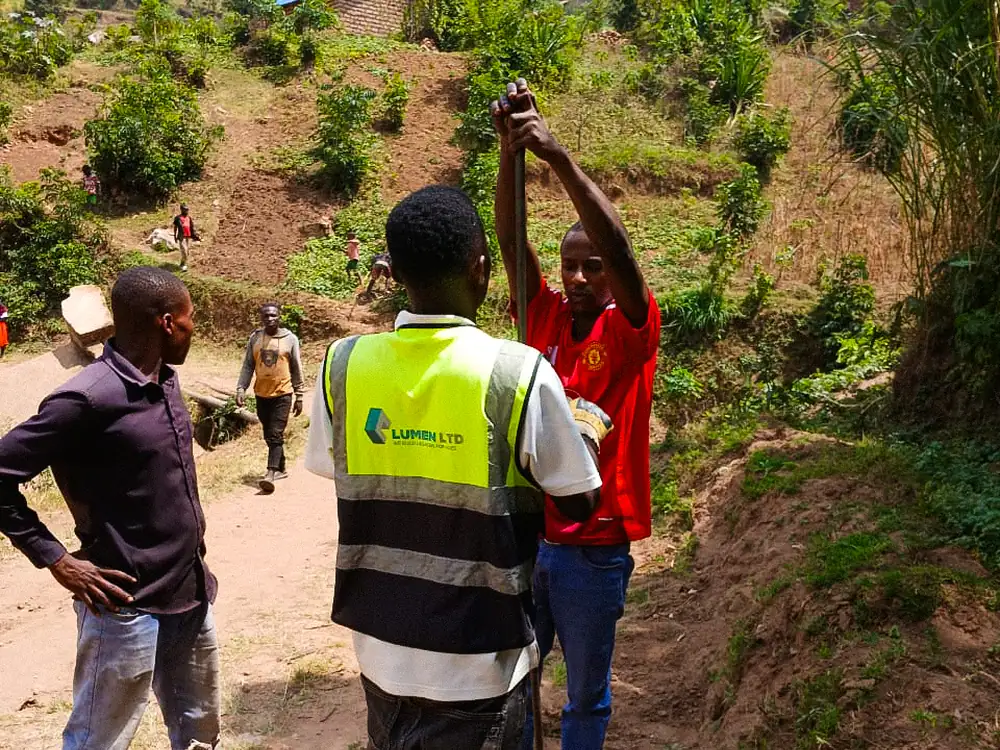
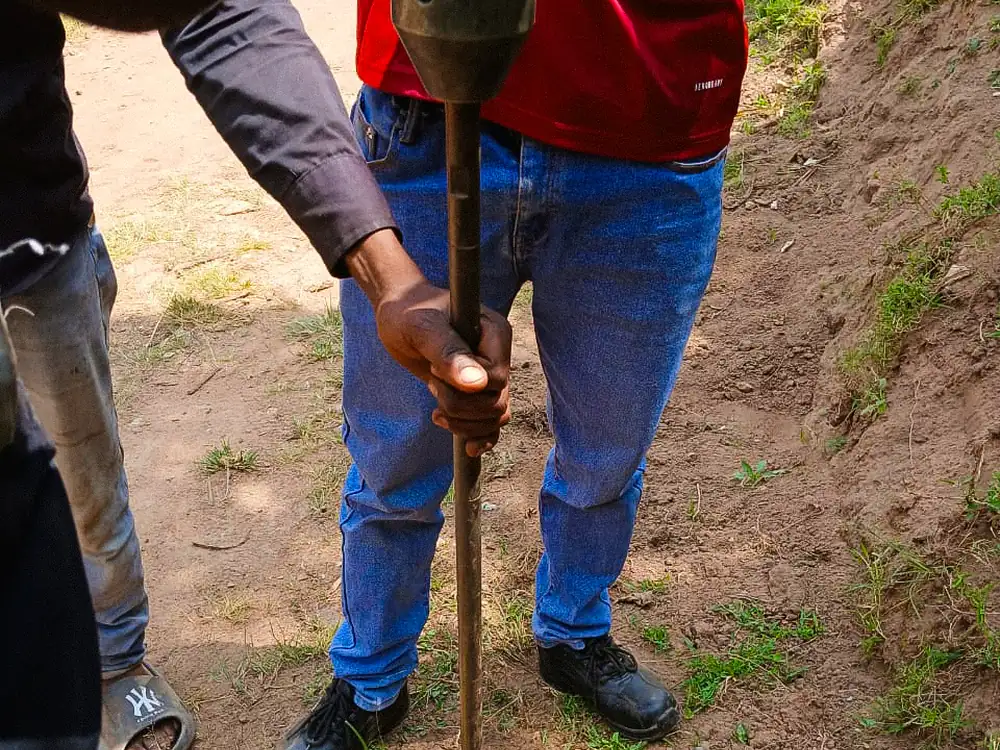
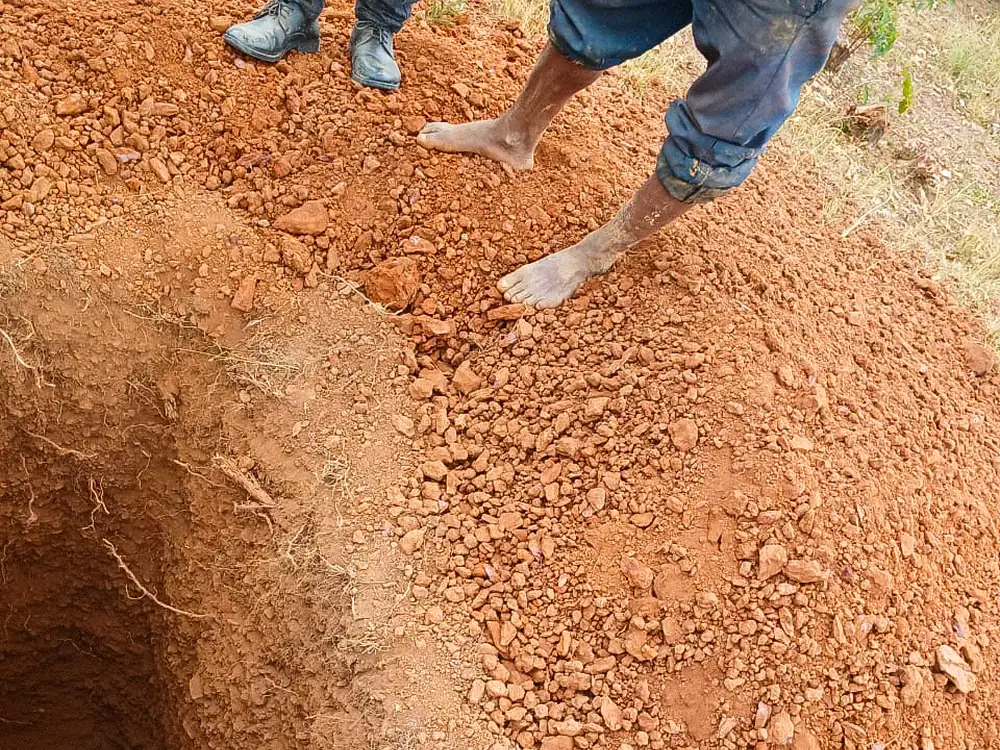
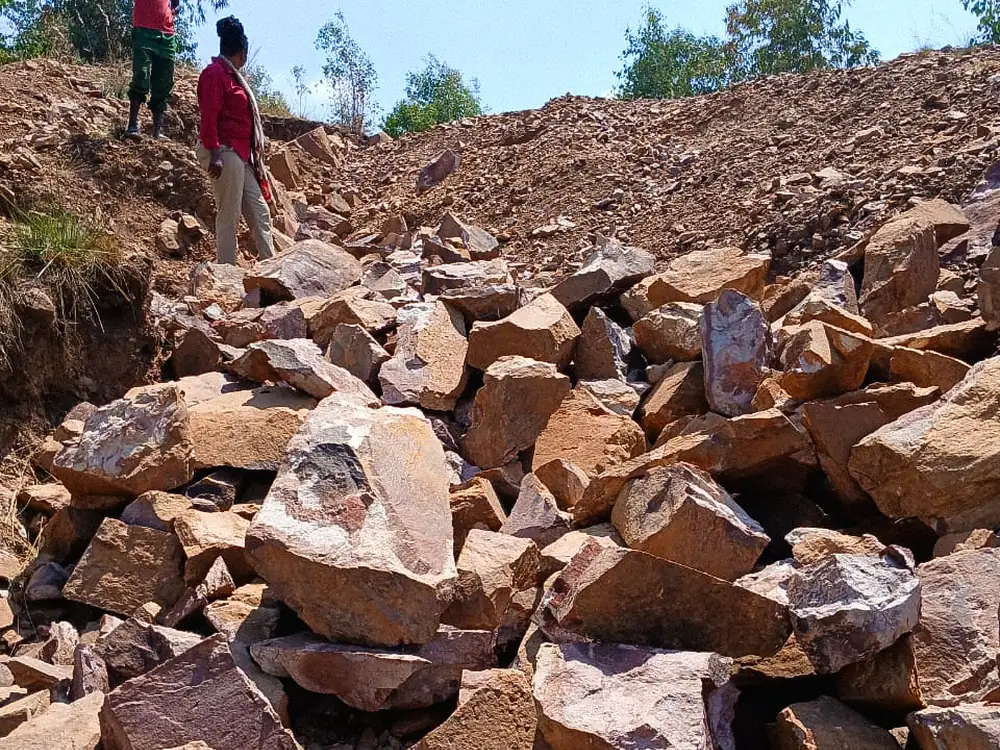
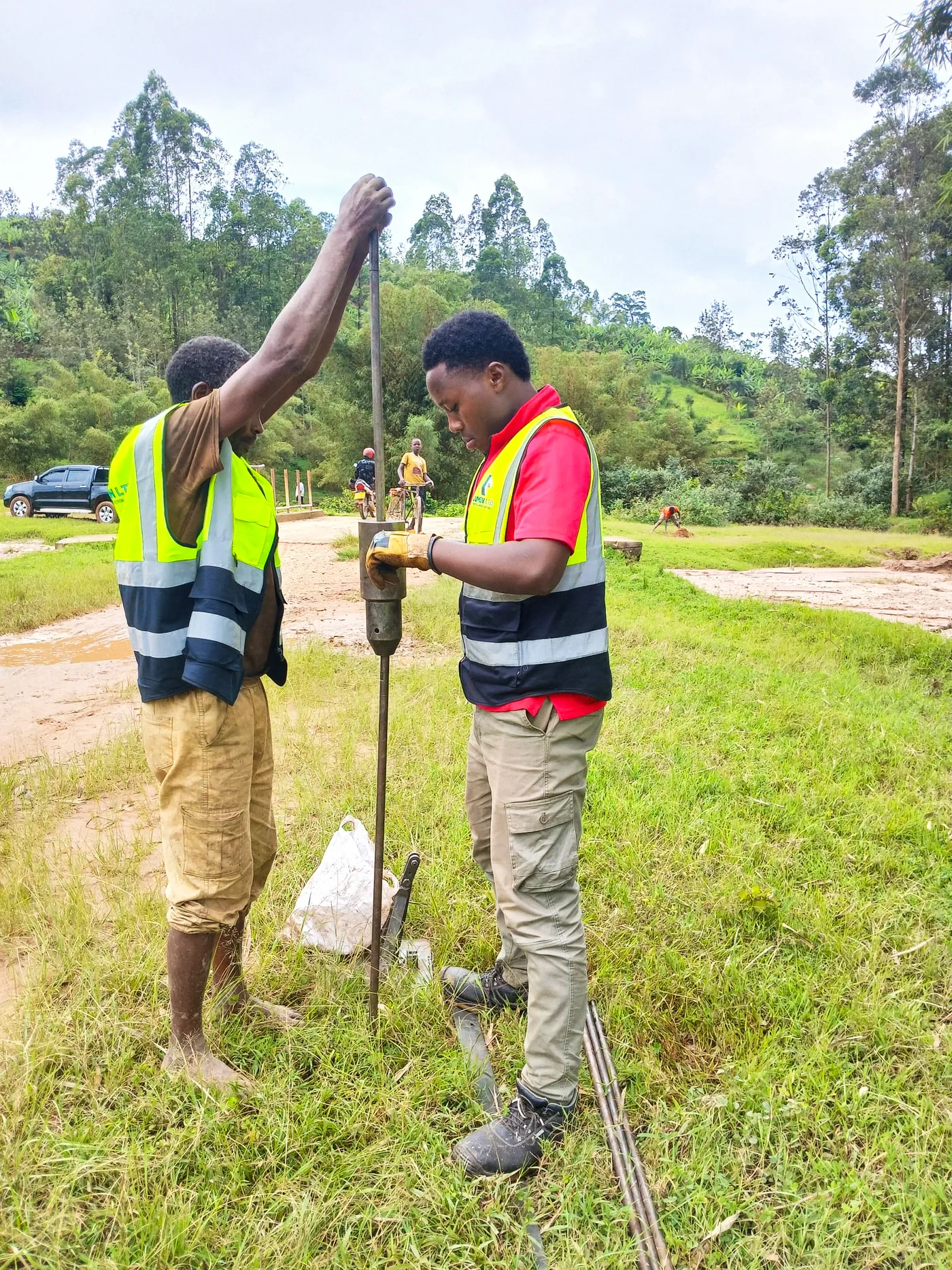
Mbuye Bridge is the third location. The record covers the existing culvert structure and erosion gully, hand auger boring and trial pitting along the alignment, and the rock source assessed for construction materials.
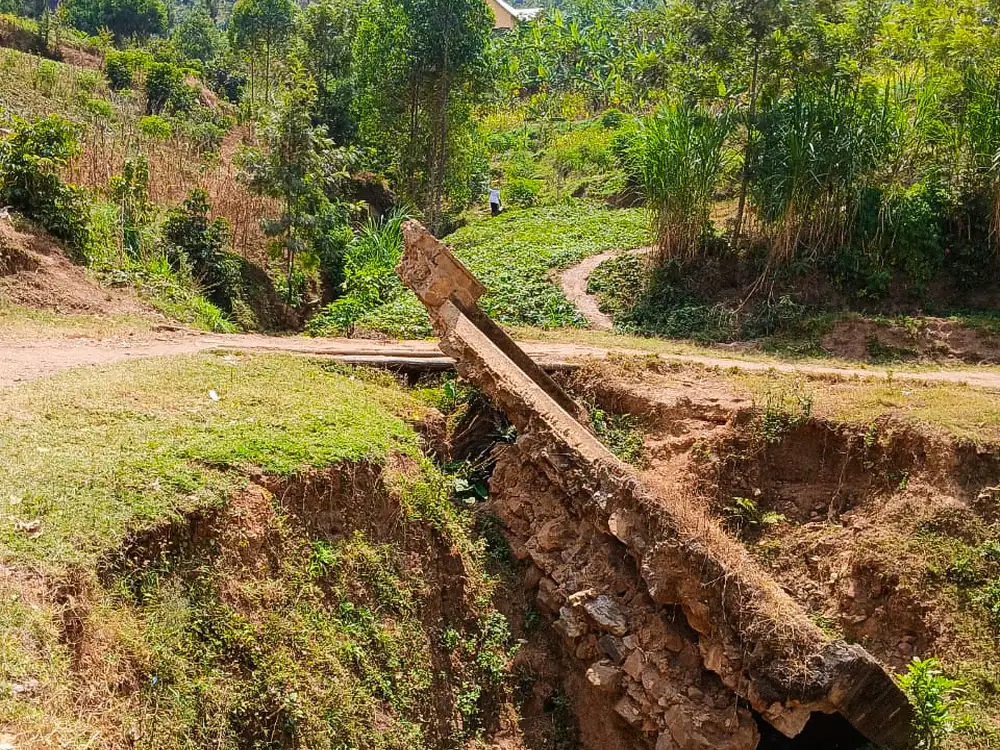
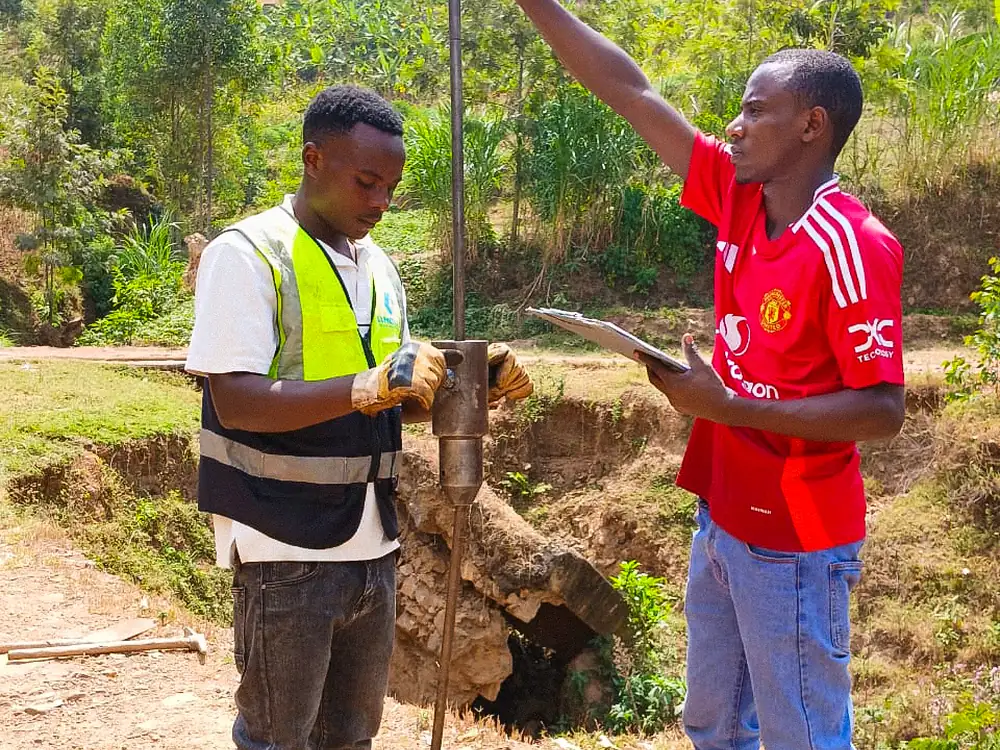
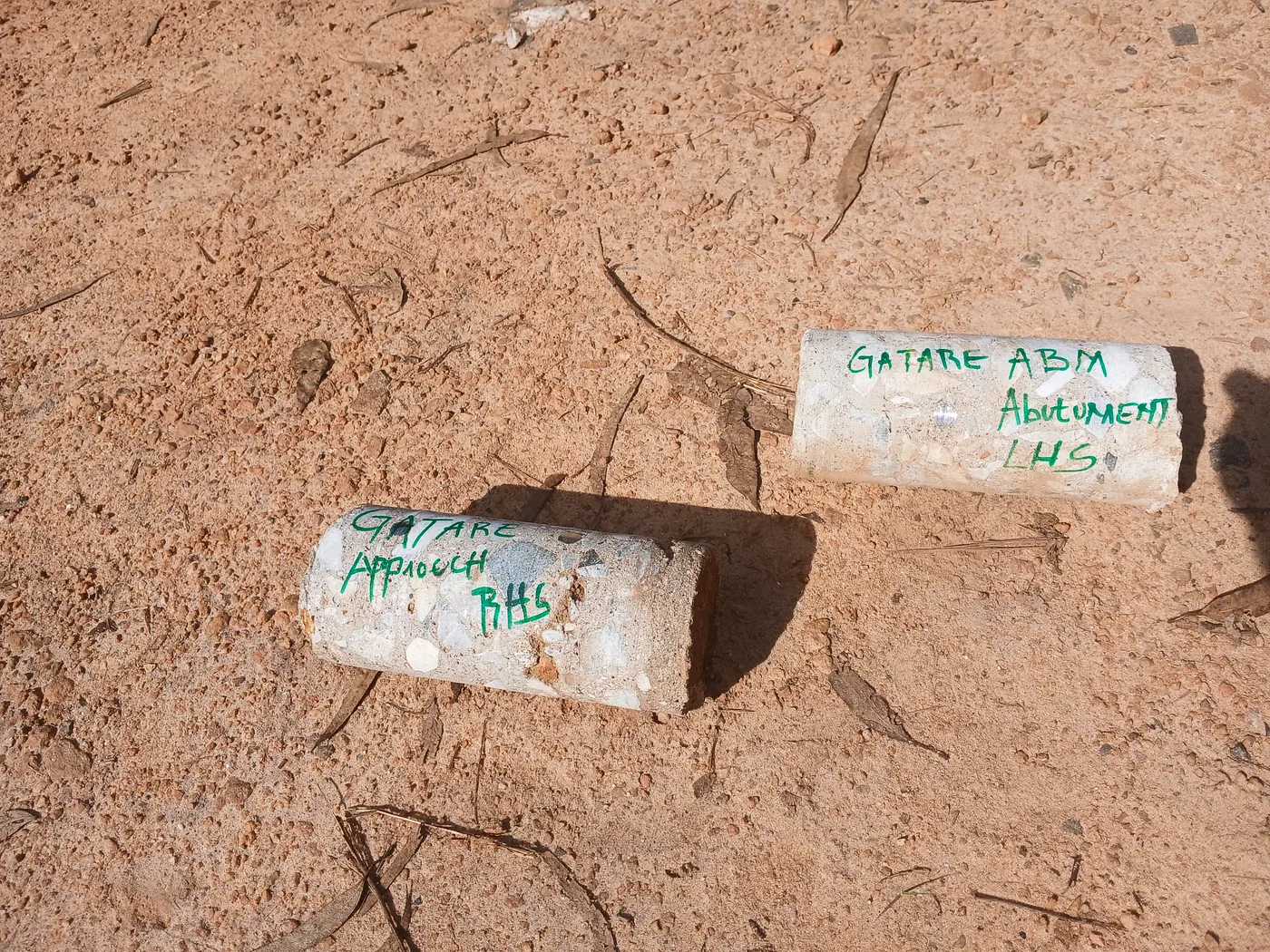
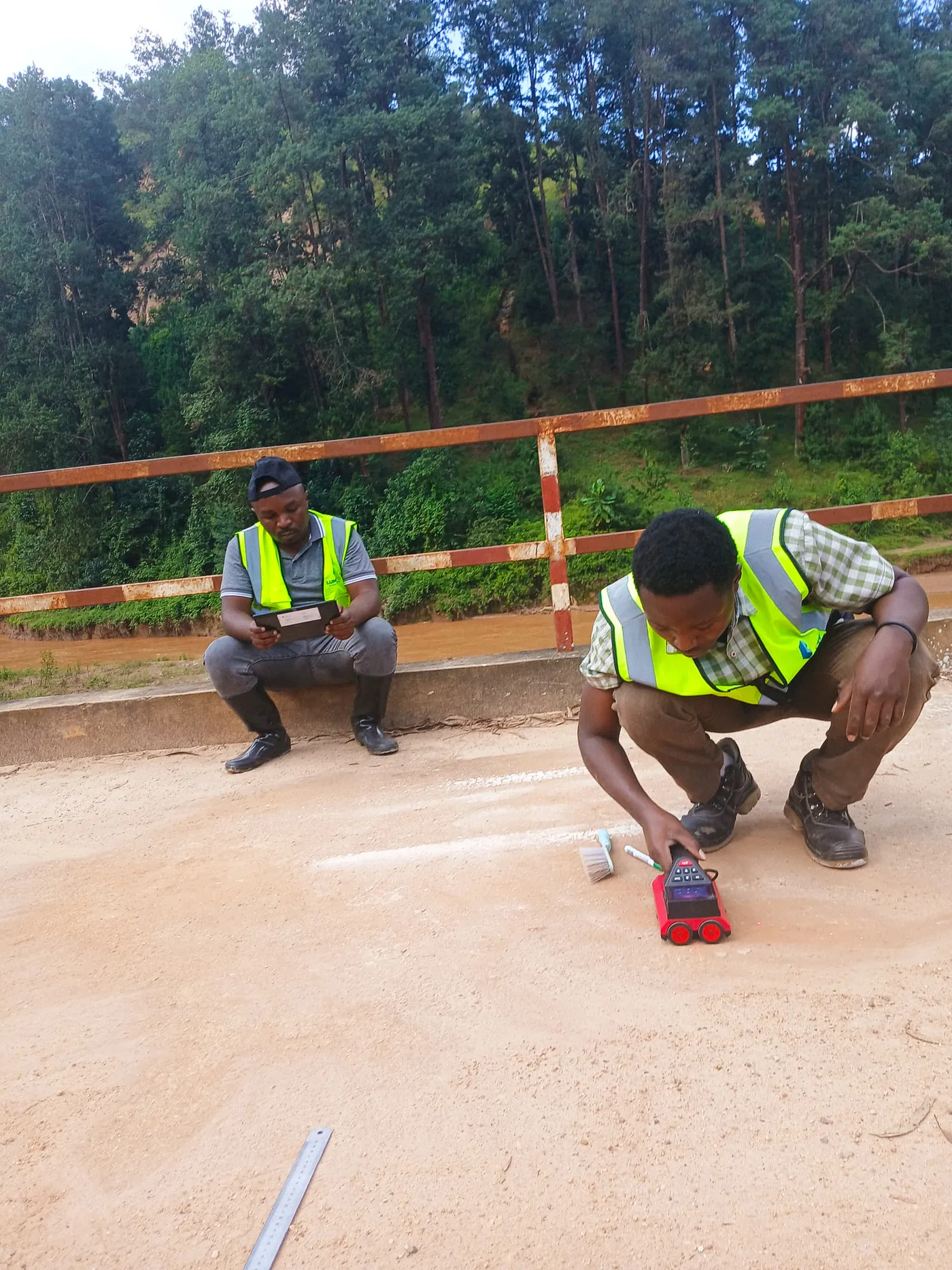
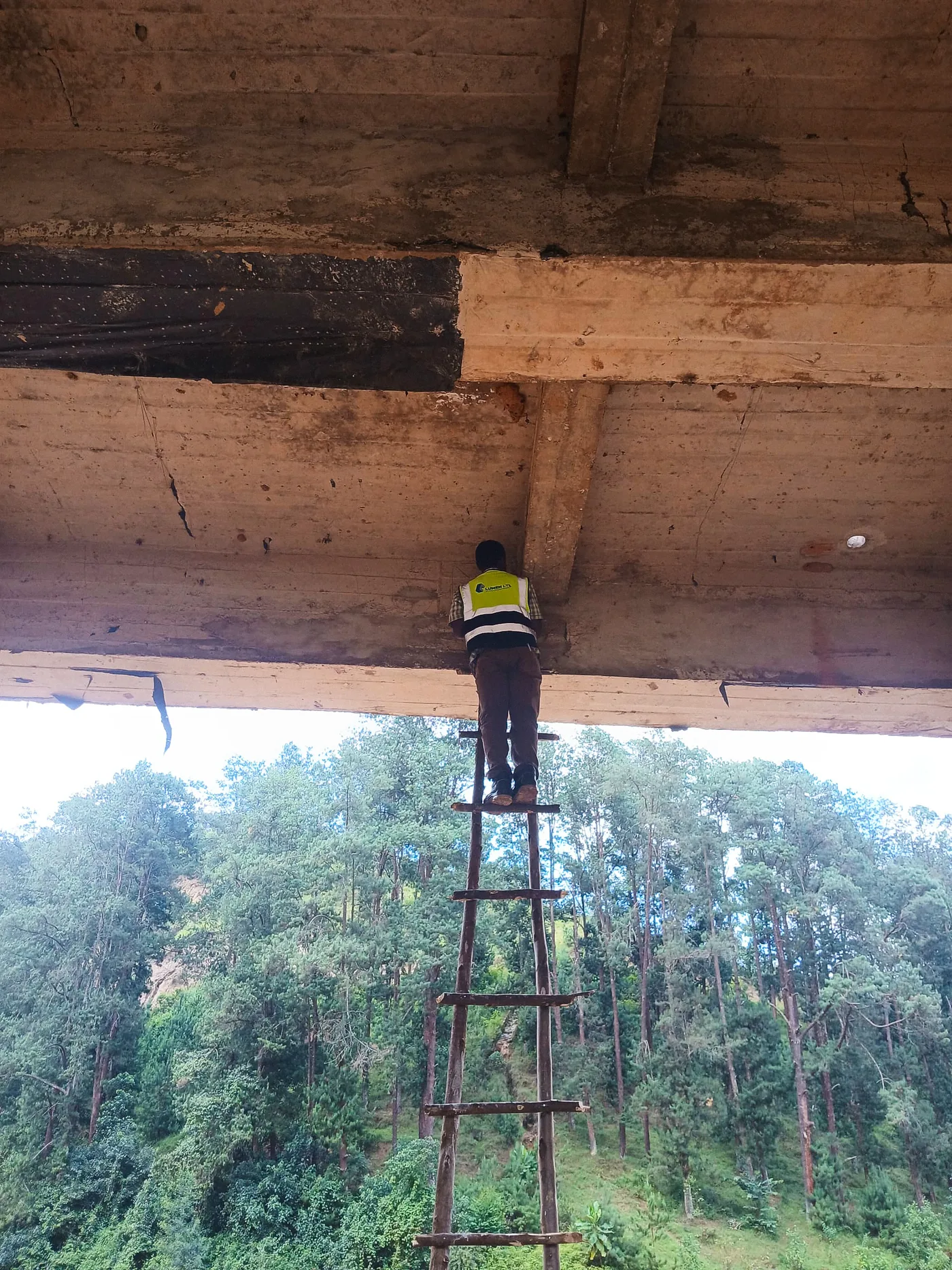
Establish the condition of an existing reinforced-concrete bridge and identify whether concrete quality or reinforcement arrangement required further structural attention.
Commissioned by GEMT Ltd as the testing and laboratory specialist for on-site assessment, laboratory analysis and technical reporting.
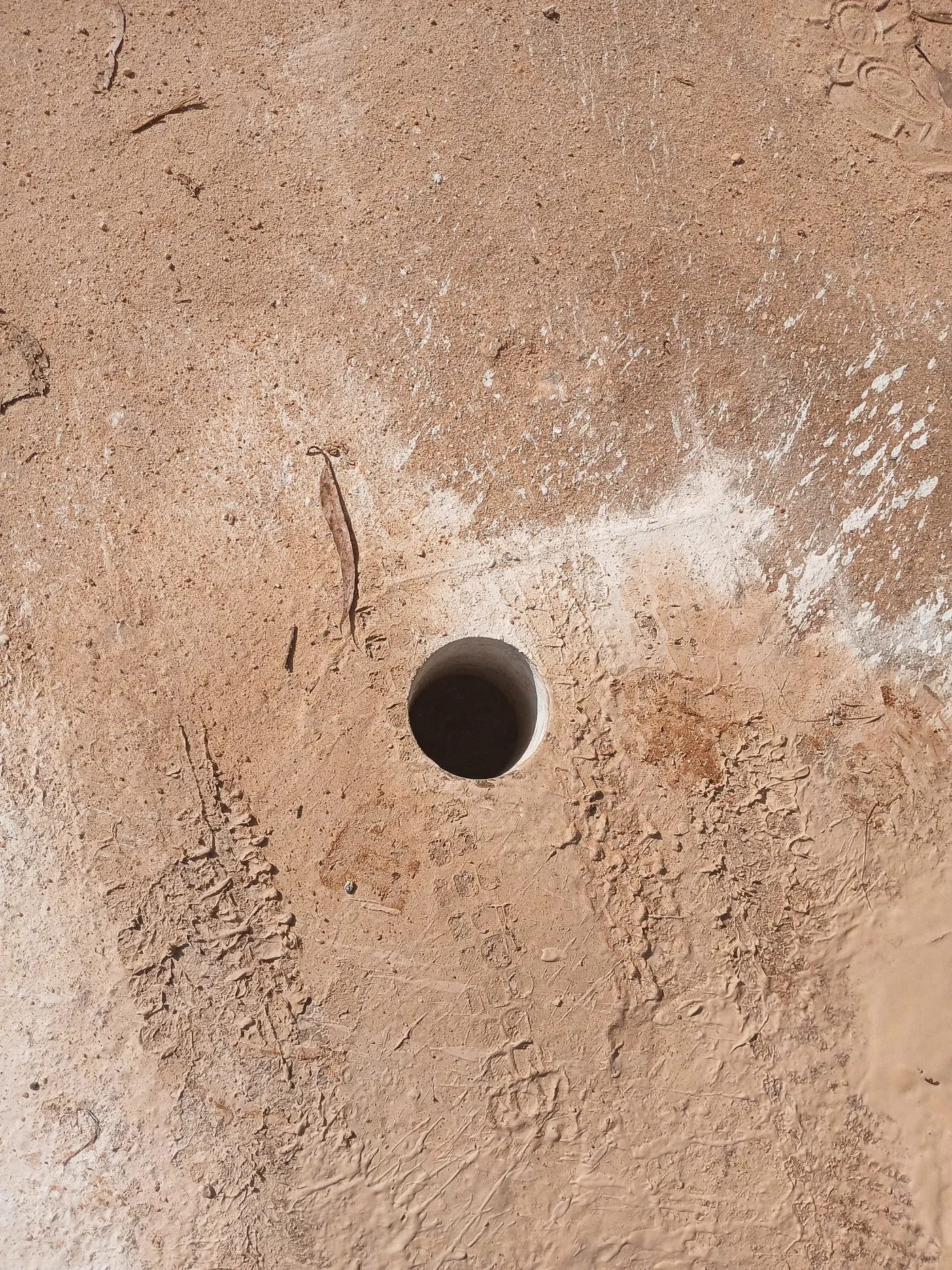
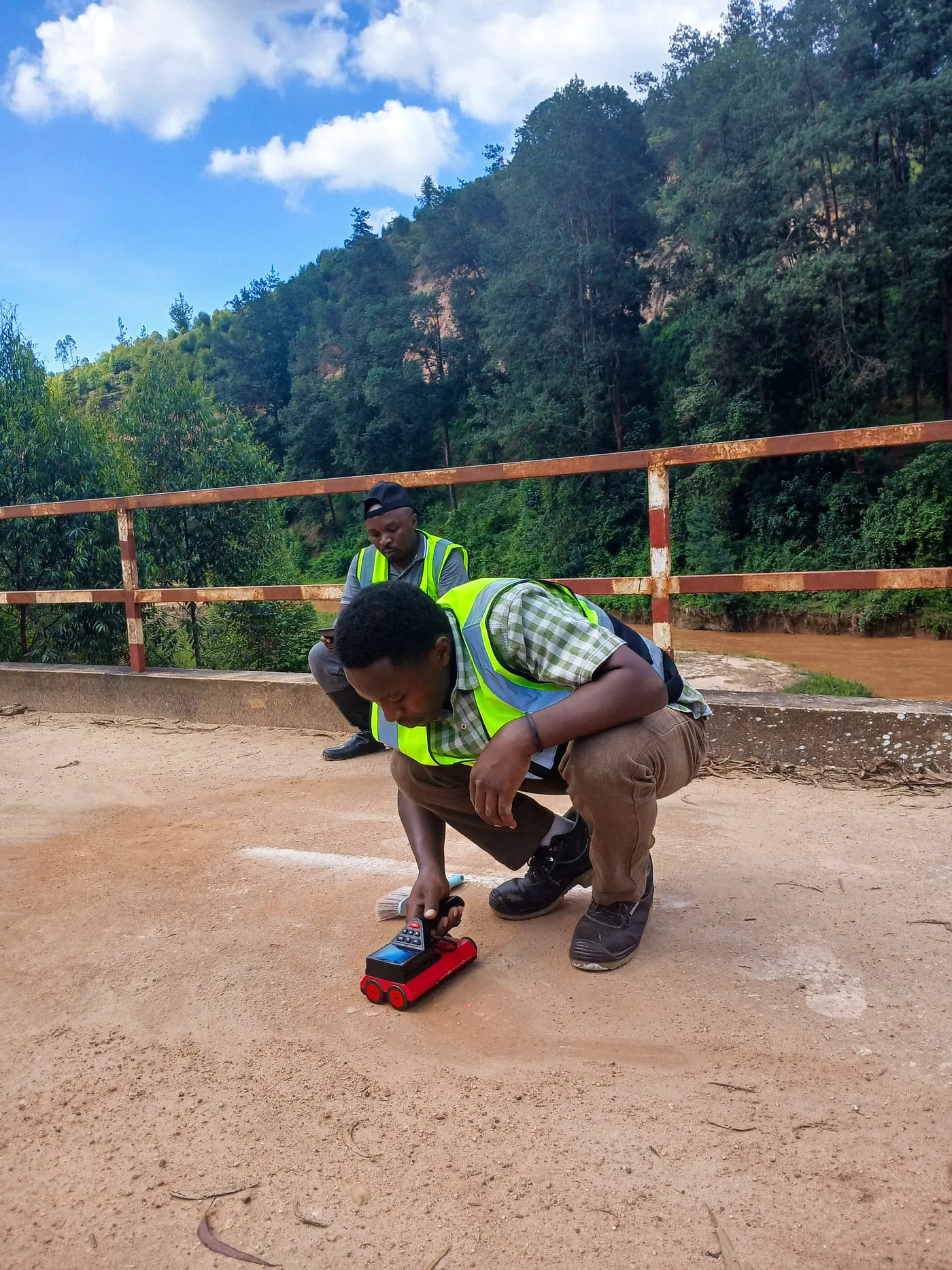
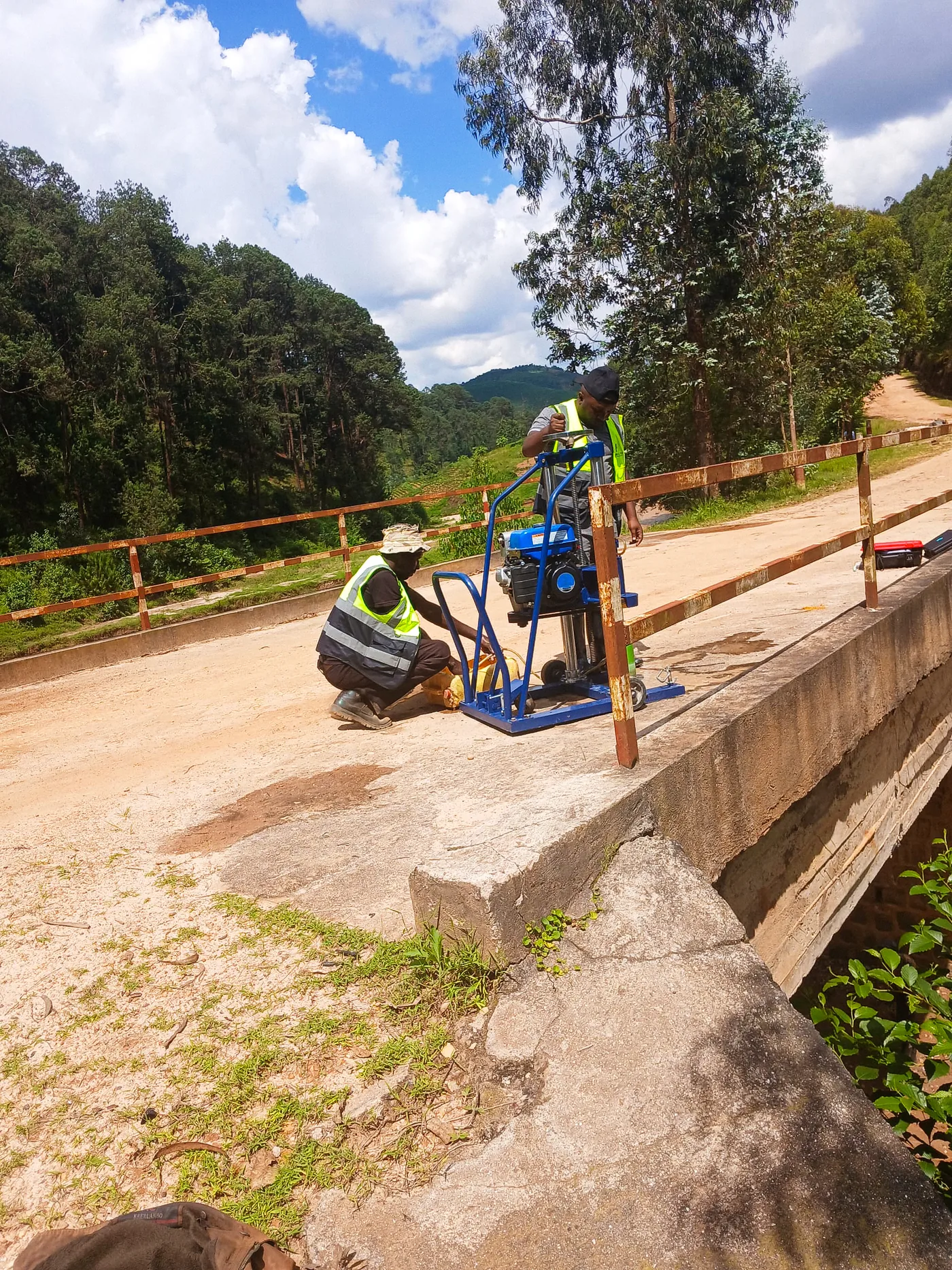
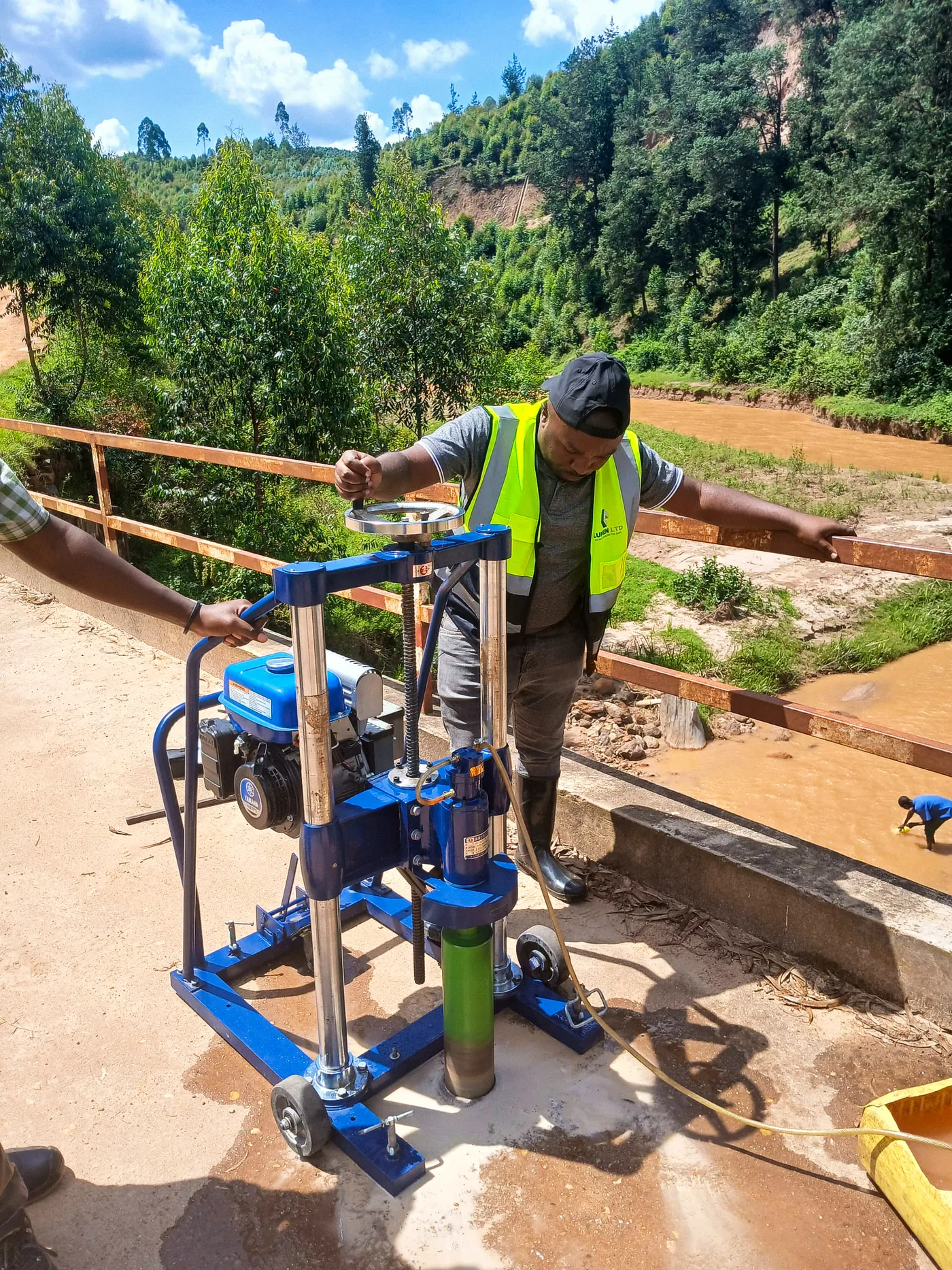
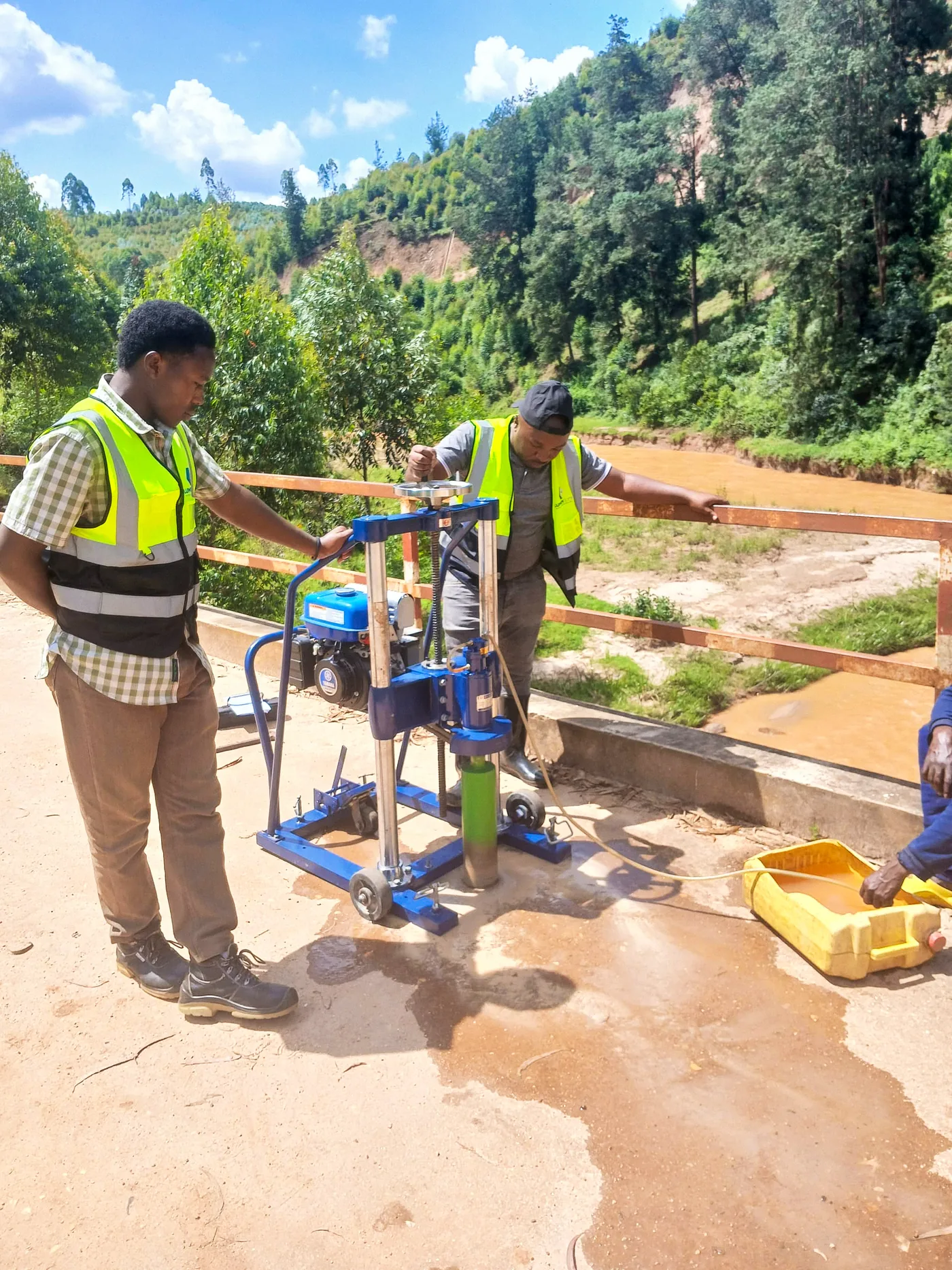
Rebound-hammer NDT across five structural elements, extraction and compressive testing of concrete cores, electromagnetic reinforcement scanning, visual inspection and documented technical interpretation.
Testing indicated generally serviceable concrete conditions in the sampled areas while identifying a localised low-strength crossing-beam zone and reinforcement-spacing irregularities. The evidence supported targeted follow-up verification rather than treating the entire bridge as uniformly deficient.
Indicative case-study summary. It does not reproduce the project report and is not a structural safety certificate.
Tell us the site, the stage you are at and the decision the results need to support. Our team will confirm the appropriate investigation and testing scope.
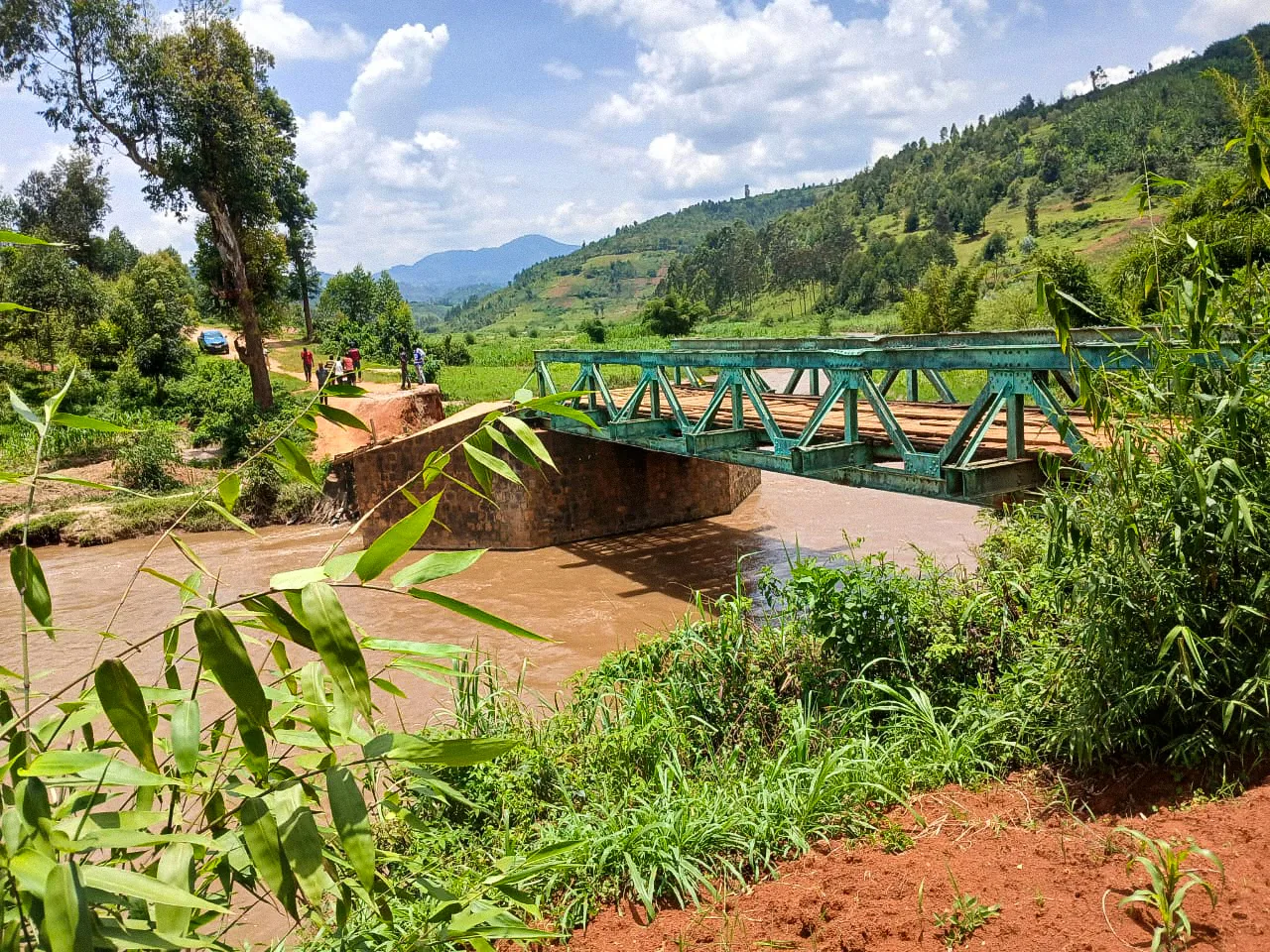
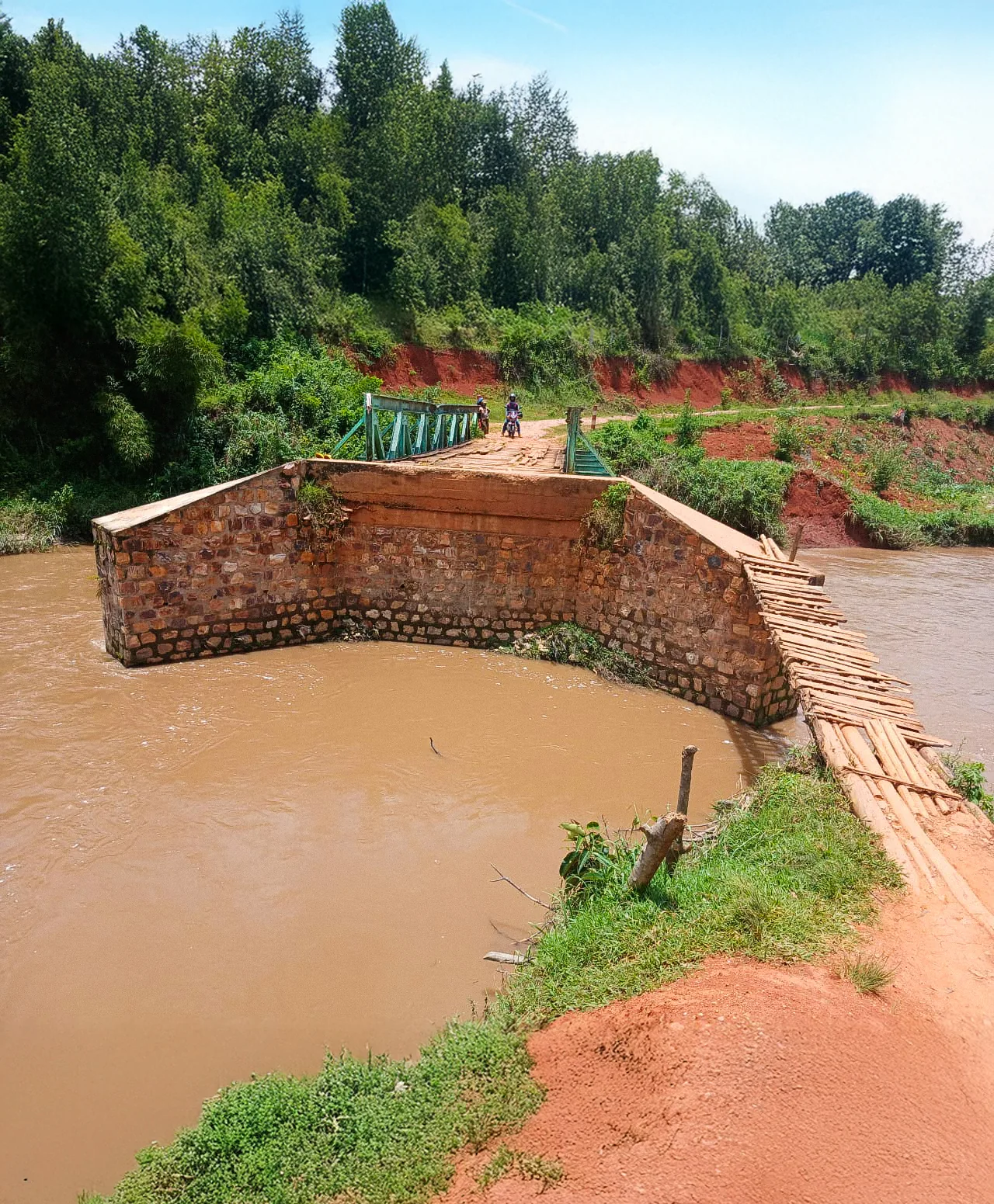
Understand foundation, slope and scour risks at a bridge site affected by seasonal flooding and moisture-sensitive soils.
Geotechnical investigation partner responsible for field investigation, laboratory testing, engineering analysis and recommendations for foundation, drainage, settlement and scour design.
Five DCP investigations to 4 m, trial pits, controlled soil sampling, Atterberg limits, particle-size distribution, compaction, CBR, direct shear and consolidation testing, followed by slope, settlement and scour-risk interpretation.
The investigation identified a soft, moisture-sensitive fine-grained profile with no competent bearing stratum encountered within 4 m and critical flood/scour exposure. The findings supported deeper-foundation investigation, drainage and stabilisation measures, scour protection and further borehole/hydraulic studies before detailed design.
Indicative case-study summary. It does not reproduce the project report and is not a structural safety certificate.
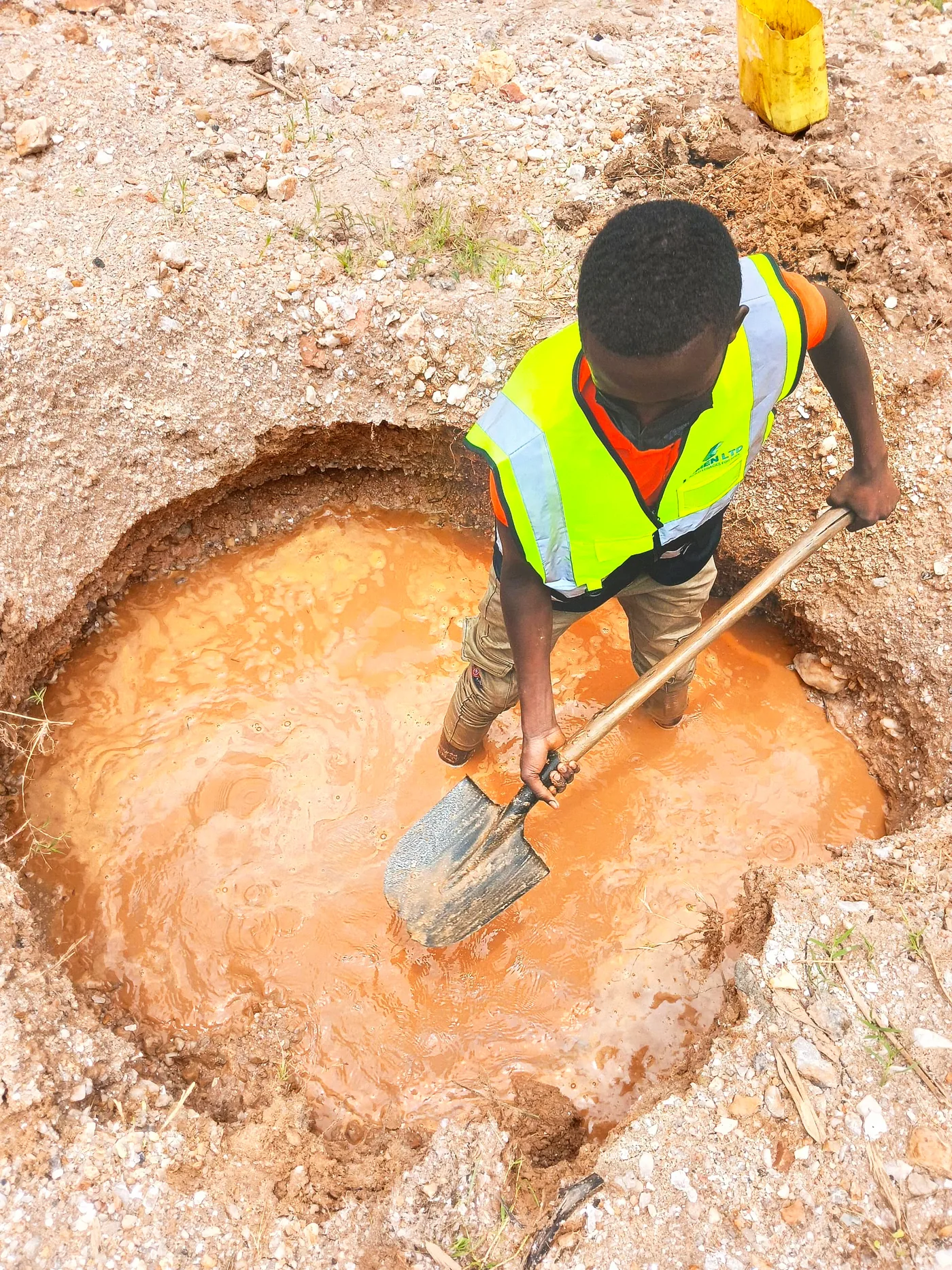
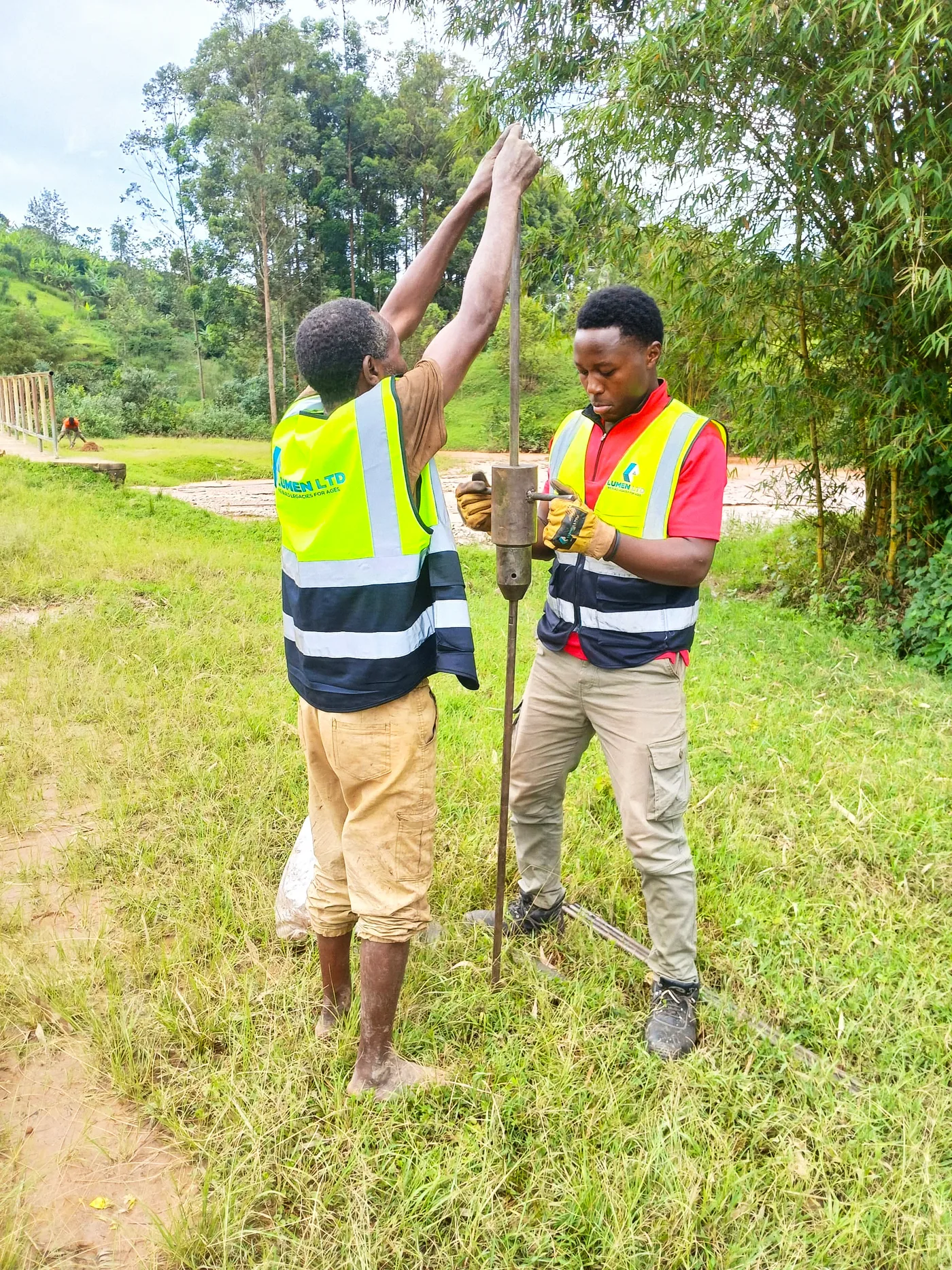
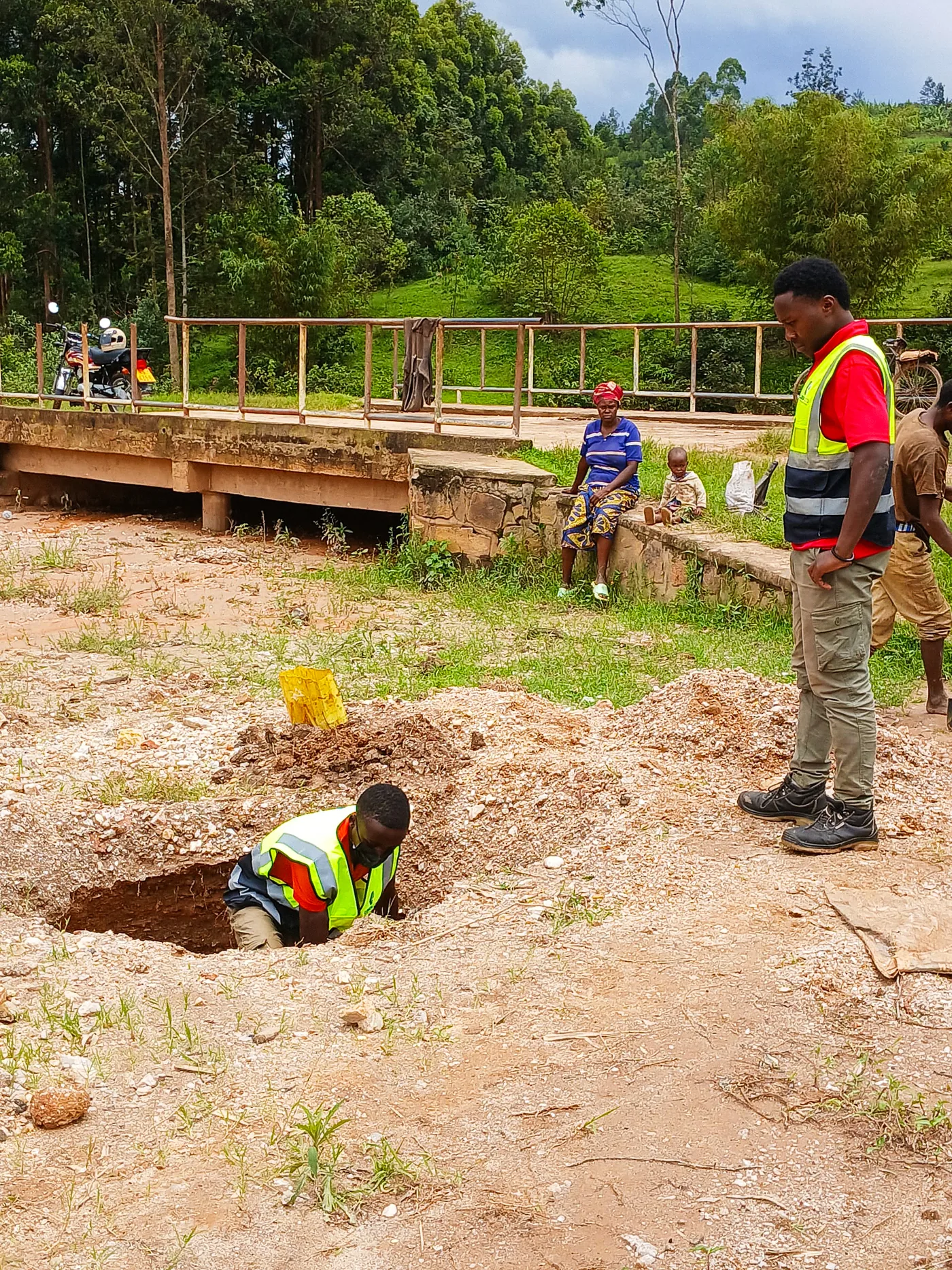
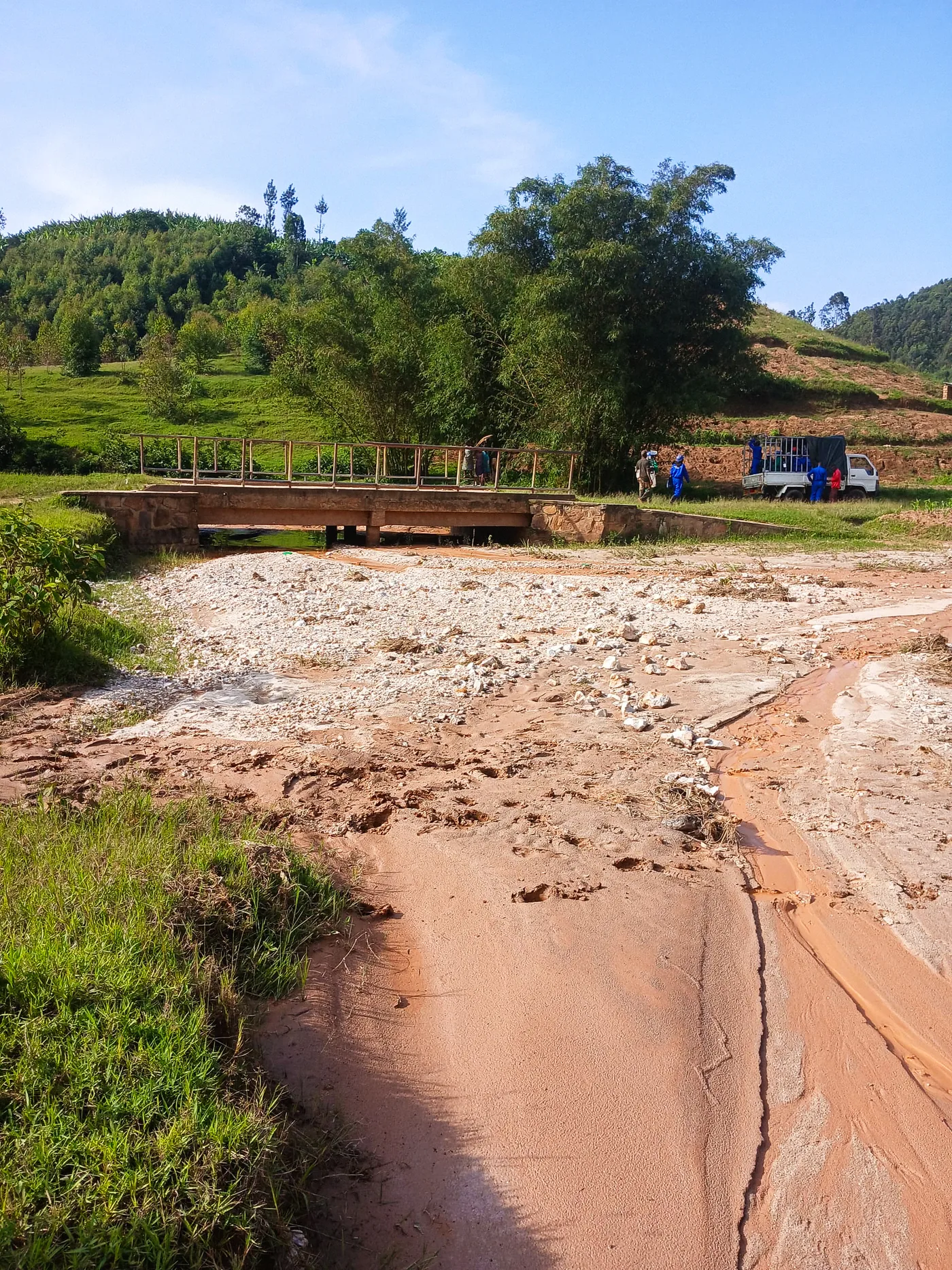
Tell us the site, the stage you are at and the decision the results need to support. Our team will confirm the appropriate investigation and testing scope.
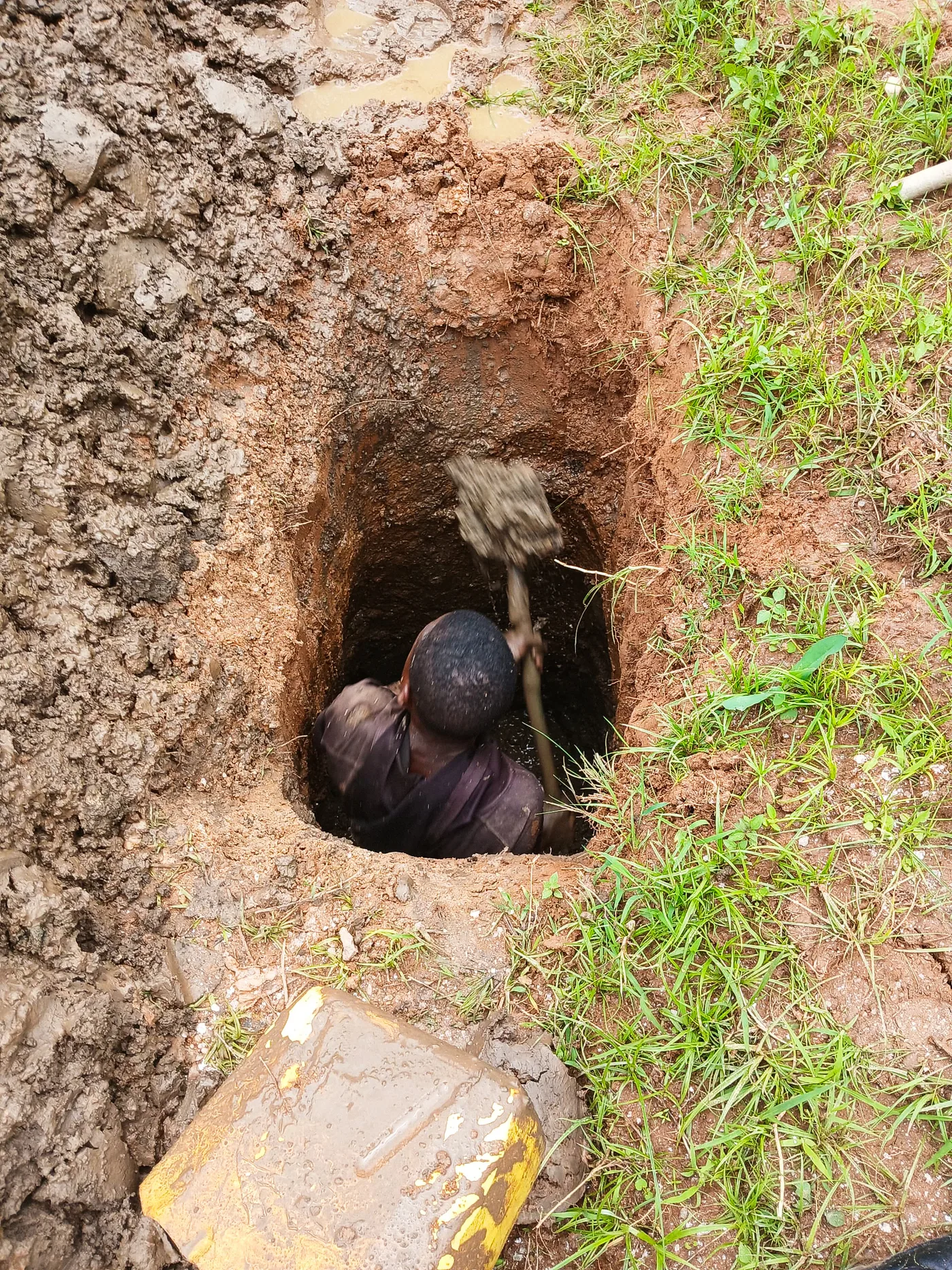
Define foundation and slope-design parameters in a valley setting with weathered near-surface materials, shallow groundwater and variable depth to competent rock.
Comprehensive geotechnical investigation for bridge foundations, abutments, embankments, drainage and retaining works.
Rotary drilling and coring, SPT, continuous geological logging, groundwater measurement, laboratory shear, physical and consolidation testing, equipment traceability and engineering interpretation.
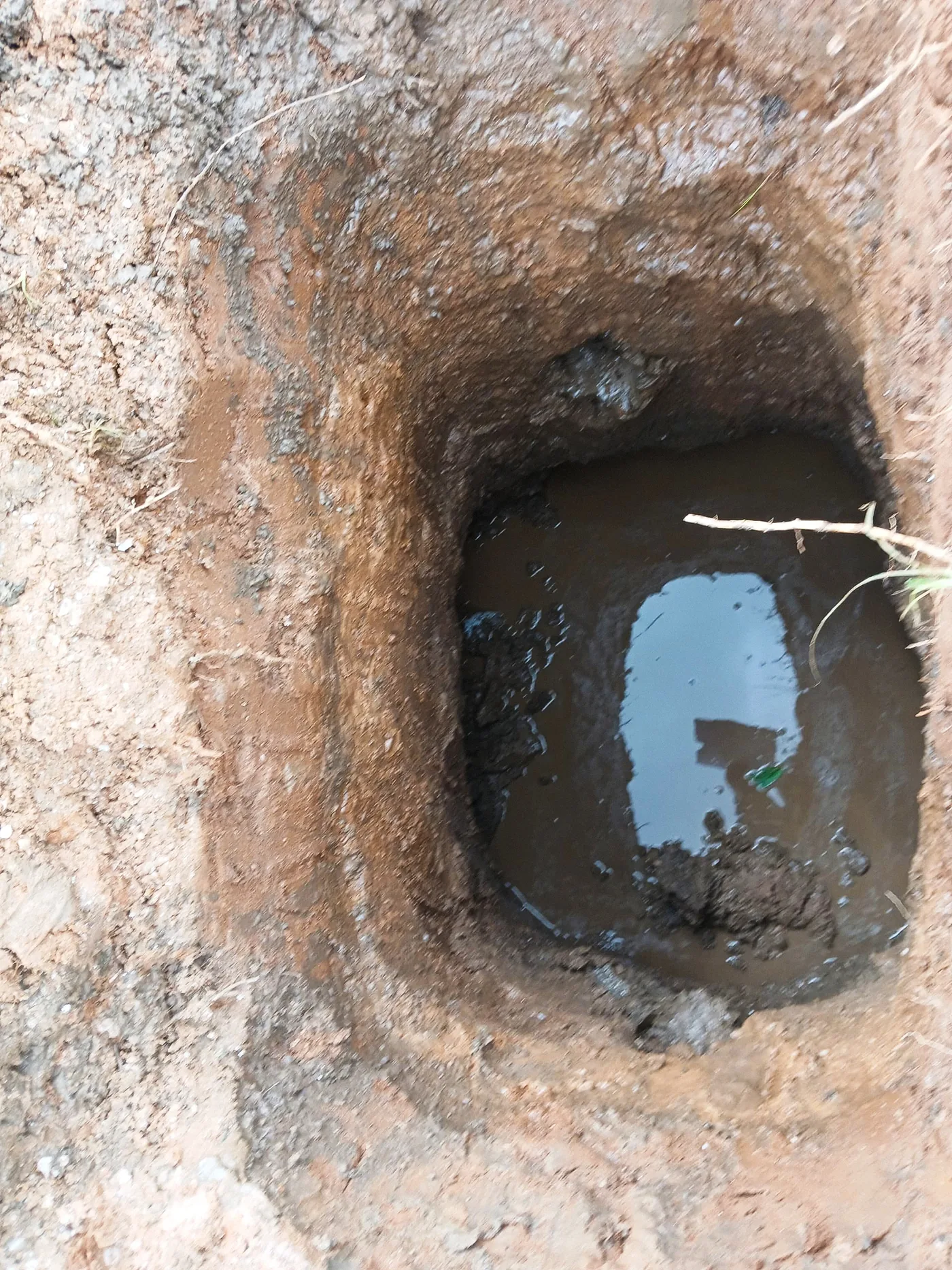
The investigation identified competent granite at approximately 9.4–12 m and shallow groundwater at approximately 4–6 m. The findings supported a deep-foundation strategy, groundwater-adjusted bearing design, comprehensive drainage and conservative slope-stability measures.
Establish a reliable foundation strategy where competent rock lies deeper and groundwater is shallow across the proposed bridge footprint.
Field investigation, drilling and coring, laboratory testing, groundwater assessment and engineering interpretation for foundation, slope and drainage design.
Four boreholes, SPT and core recovery, continuous logging, groundwater monitoring, direct shear, density and moisture and consolidation testing, followed by bearing-capacity and geotechnical-risk assessment.
The investigation identified competent schist at approximately 15 m and groundwater at approximately 3–4 m. The results supported longer deep-foundation elements, groundwater-adjusted design bearing values, drainage and dewatering measures and conservative slope design.
Indicative case-study summaries. They describe decisions supported by evidence, do not reproduce the project reports and are not structural safety certificates.
Tell us the site, the stage you are at and the decision the results need to support. Our team will confirm the appropriate investigation and testing scope.
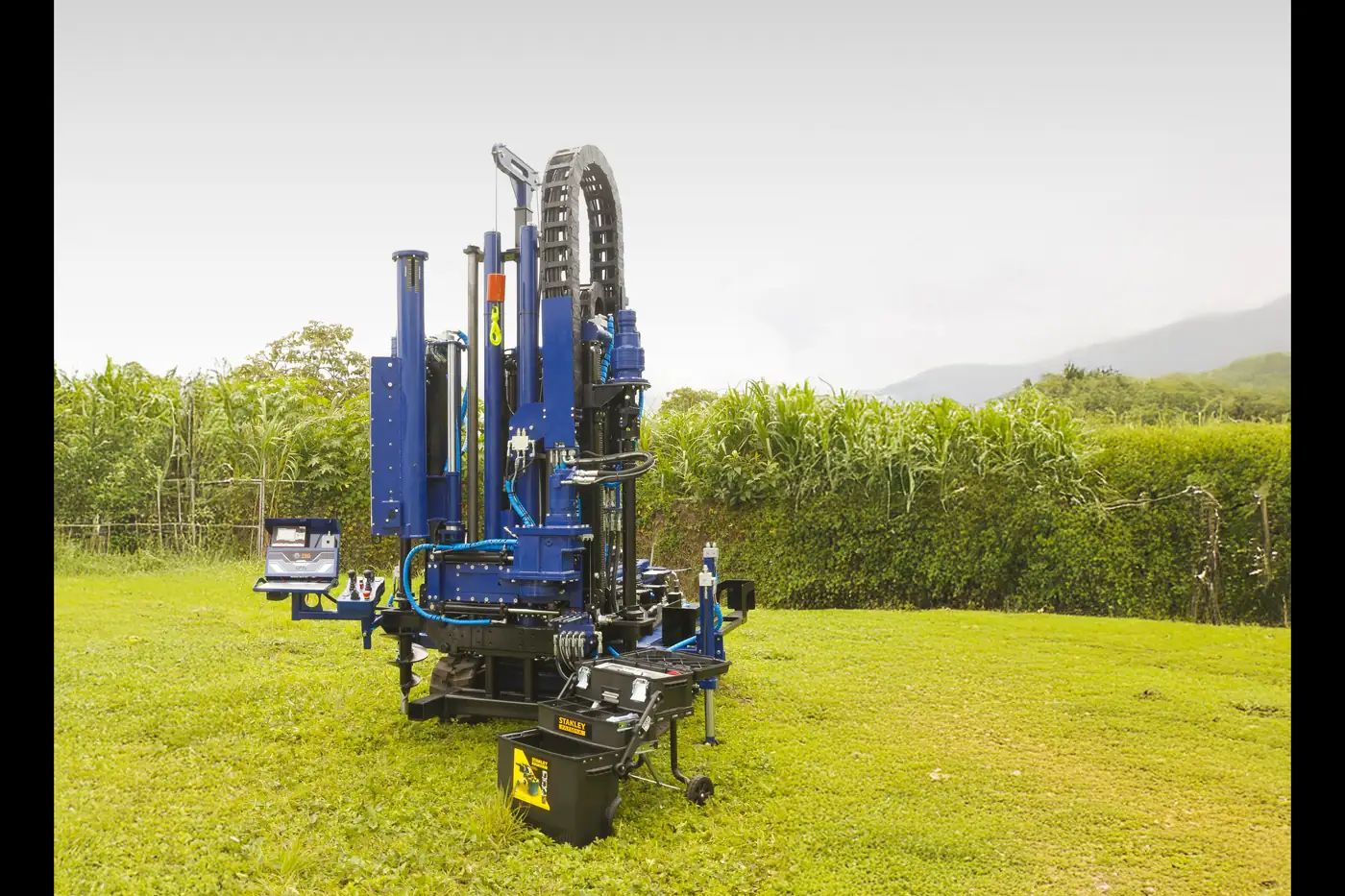
Major road works depend on a clear understanding of what lies below the surface. Across multiple corridors, ground conditions varied significantly, from weathered rock to mixed clayey, silty and granular soils. The investigation also identified shallow groundwater at several locations and highly fractured rock in parts of the alignment. LUMEN's task was to convert these variable site conditions into traceable, practical engineering information for drainage, slope, foundation and construction-risk decisions.
Field drilling, in-situ testing, laboratory analysis and integrated geotechnical reporting, coordinated across the project corridors with specialist equipment, water supply and field personnel.
Four integrated workstreams. Borehole drilling and geological logging — a borehole programme using rotary wash boring, with systematic lithological logging, sample identification and core-box preservation. In-situ testing and groundwater monitoring — Standard Penetration Tests at specified intervals, standpipe piezometer installation and initial groundwater levels recorded after drilling. Laboratory testing — direct-shear, triaxial and physical-property testing to determine key soil and rock parameters. Integrated geotechnical reporting — borehole logs, field observations, test data, groundwater records and engineering interpretation consolidated in a final geotechnical report with documented recommendations and appendices.
An organised, multi-corridor geotechnical evidence base: borehole logs, drilling records and core-recovery documentation; in-situ SPT results, lithological logs and initial groundwater measurements; standpipe piezometer installation records for ongoing monitoring; direct-shear, triaxial and physical-property laboratory results including reported shear-strength parameters; and a final integrated geotechnical report with engineering evaluation, design considerations and recommendations.
Groundwater management — comprehensive surface and subsurface drainage, including sub-drains and lined surface ditches, was recommended to manage seepage and runoff. Slope stability — fractured rock conditions called for conservative slope design, with lower-bound strength parameters, flatter slopes where appropriate, and structural support or ground improvement where required. Foundation design — reported allowable bearing values were identified as subject to groundwater correction and location-specific detailed assessment. Monitoring — continued piezometer monitoring was recommended during design and construction, especially in rainy periods, to validate groundwater assumptions and manage associated risk.
Indicative case-study summary. It describes investigation, testing, analysis and reporting outputs, does not reproduce the project reports, and does not claim construction completion or post-construction performance.
Early, reliable ground investigation can reduce uncertainty before it becomes a design or construction challenge. Tell us the site, the stage and the decision the results need to support.